Using Wind Direction to Find Cleaner Water
Why Water Clarity Matters More Than Wind Speed
Most anglers check the forecast for one number: wind strength. That tells you whether you can stand up on the rocks or hold a drift offshore, but it says very little about whether the fish can see your bait. Around Sydney, the difference between a productive session and a blank often comes down to clarity — and clarity is driven mainly by wind direction, plus the swell and rainfall that came before it.
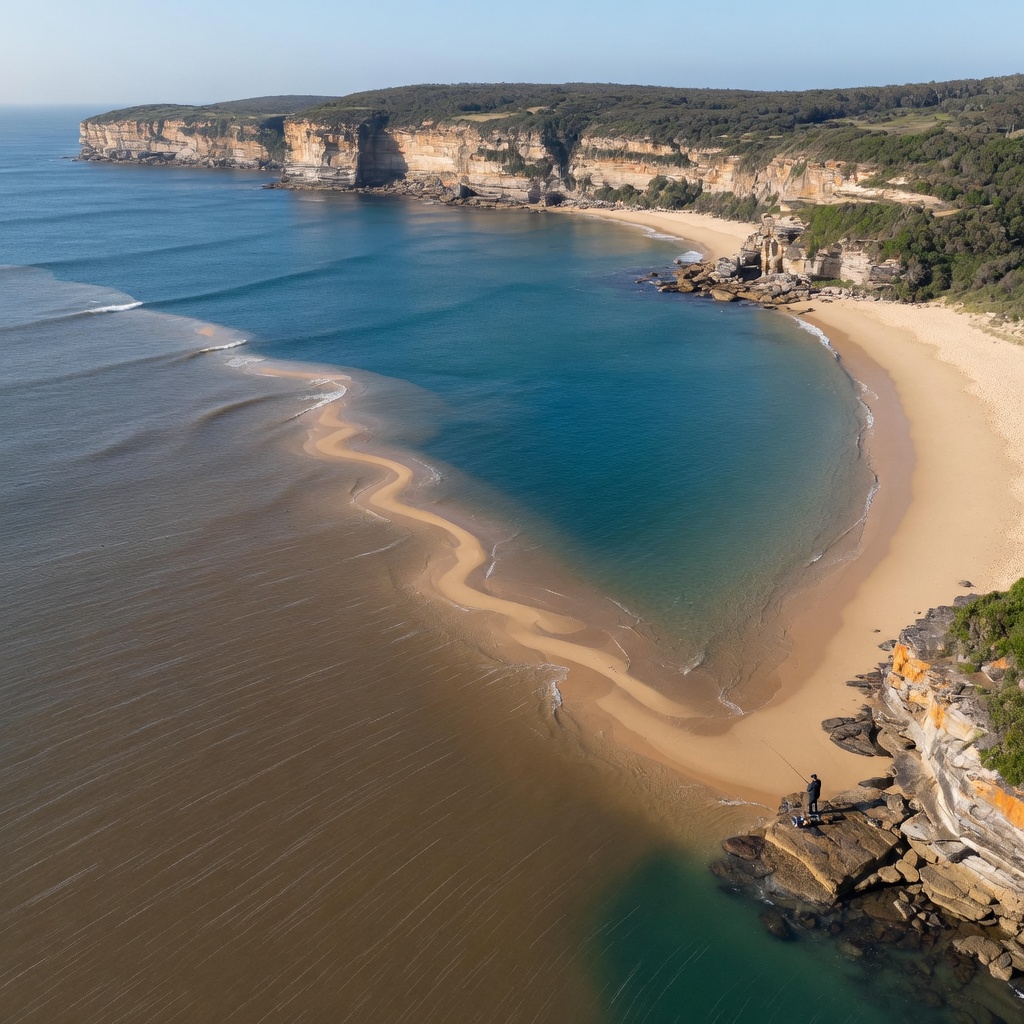
Dirty water isn't always bad. A discoloured wash on a beach gutter can concentrate bream, whiting and tailor that feel safe feeding in the murk. But sand-choked, foamy soup with no visibility usually shuts things down, especially for sight-feeders like kingfish, snapper and squid. Learning to predict where the clean line sits saves fuel, walking and wasted tides.
How Each Wind Direction Behaves Around Sydney
The coastline here faces broadly east, with headlands, bays and river mouths breaking it up. That geometry means every wind direction produces a predictable pattern.
- Westerly and north-westerly: offshore winds. They flatten the surface, push surface chop away from the coast and usually leave inshore water clean and glassy. Great for rock fishing, squid and early-morning boat work close in, though they can make the water feel cold and clear enough that fish become shy.
- Nor'easter: the classic summer sea breeze. It builds through the afternoon, stacks a short wind chop against the coast and stirs up the top of the water column. Northern corners of beaches and the southern side of headlands stay cleanest.
- Southerly and south-easterly: often arrive with a change and a rising swell. Expect discoloured water, weed and drifting foam on south-facing ledges and beaches, with cleaner pockets tucked in behind northern headlands.
- Easterly: the hardest to fish. It drives swell straight onshore, churns the sand and gives you nowhere to hide. Look to sheltered estuaries and harbour foreshores instead.
Finding the Clean Line
Clean water usually sits on the lee side of structure. If the wind is from the north, walk to the northern end of a beach where the headland blocks the fetch; if it swings south, do the opposite. On the rocks, the same logic applies to individual ledges — a platform facing away from the wind will hold clearer water and a workable wash rather than an unfishable surge.
Offshore, look for the colour change. Wind-driven surface water and river runoff form a visible edge, often marked by a line of foam, weed or floating debris. Fish the clean side of that edge, or work baits and lures right along it. These lines shift with the tide, so re-check every hour rather than anchoring to one waypoint.
Practical Checks Before You Leave
- Read wind direction and strength for the whole session, not just the start — a change can flip clarity in an hour.
- Cross-check swell height and period. A long-period south swell dirties beaches even in light winds.
- Note recent rainfall. Two days after heavy rain, upper estuaries run brown while the lower reaches clean up first on the flood tide.
- Match the tide. A rising tide generally pushes cleaner ocean water into estuaries and over beach gutters.
Wind, Tide and Moon Working Together
Wind sets clarity; tide sets movement. The best windows tend to be when a light offshore breeze coincides with a strong run of tide around the new or full moon, giving you clean water plus current to move bait. When a big tide runs against a fresh onshore wind, the surface turns into a lumpy, stirred mess — safe enough in a boat, but hard work from the stones.
Keep a simple log: date, wind direction, swell, tide stage and what you caught. After a season you'll know which Sydney beaches and ledges clean up first on a westerly and which need three quiet days to recover from a southerly blow.
Safety Comes First
Onshore winds combined with rising swell are the main risk on Sydney's rock platforms. If the wash is reaching your fishing spot, move up and away. Wear a lifejacket, fish with a mate, and treat any forecast change as a reason to leave early rather than stay one more cast.
Questions about local conditions? Contact Tide Fishing on +61292658222 or [email protected] during Mon–Fri: 09:00 – 17:00 (AEST). Conditions described here are general guidance only — always check the current official forecast and warnings before heading out.

Navigation
See also
FAQ