How Ocean Currents Influence Coastal Fishing Success
Why Currents Matter More Than Most Anglers Think
Tide charts and moon phases get most of the attention, but along the New South Wales coast the movement of larger bodies of water often decides whether a session produces fish or a sore casting arm. Currents carry warmth, nutrients, plankton and baitfish, and predators simply follow that conveyor belt. When you understand where the moving water is going, you stop guessing at spots and start reading the ocean the way it actually behaves.
For anglers fishing around Sydney, the dominant influence is the East Australian Current, which pushes warm water southward down the shelf edge. It rarely runs in a straight line. Instead it wanders, pinches in close to headlands, then swings offshore, spinning off eddies that can park warm blue water within a short run of the coast or leave cold green water pressed against the beaches for days.
Reading the East Australian Current
Before leaving home, check sea surface temperature and current maps alongside your usual tide and swell forecast. Three things are worth noting:
- Temperature breaks: a change of one or two degrees over a short distance concentrates bait and pelagic species along the edge.
- Current direction and speed: a strong southerly set will drag berley trails and lines sideways, changing how you anchor, drift or cast.
- Eddies: warm-core eddies spinning off the main current can bring clean water inshore, while cold eddies often flatten the bite for a few days.
Compare that information with what you actually see when you arrive. Water colour, foam lines, floating weed and the direction of drifting debris tell you more in two minutes than any forecast page.
Currents on the Rocks and Beaches
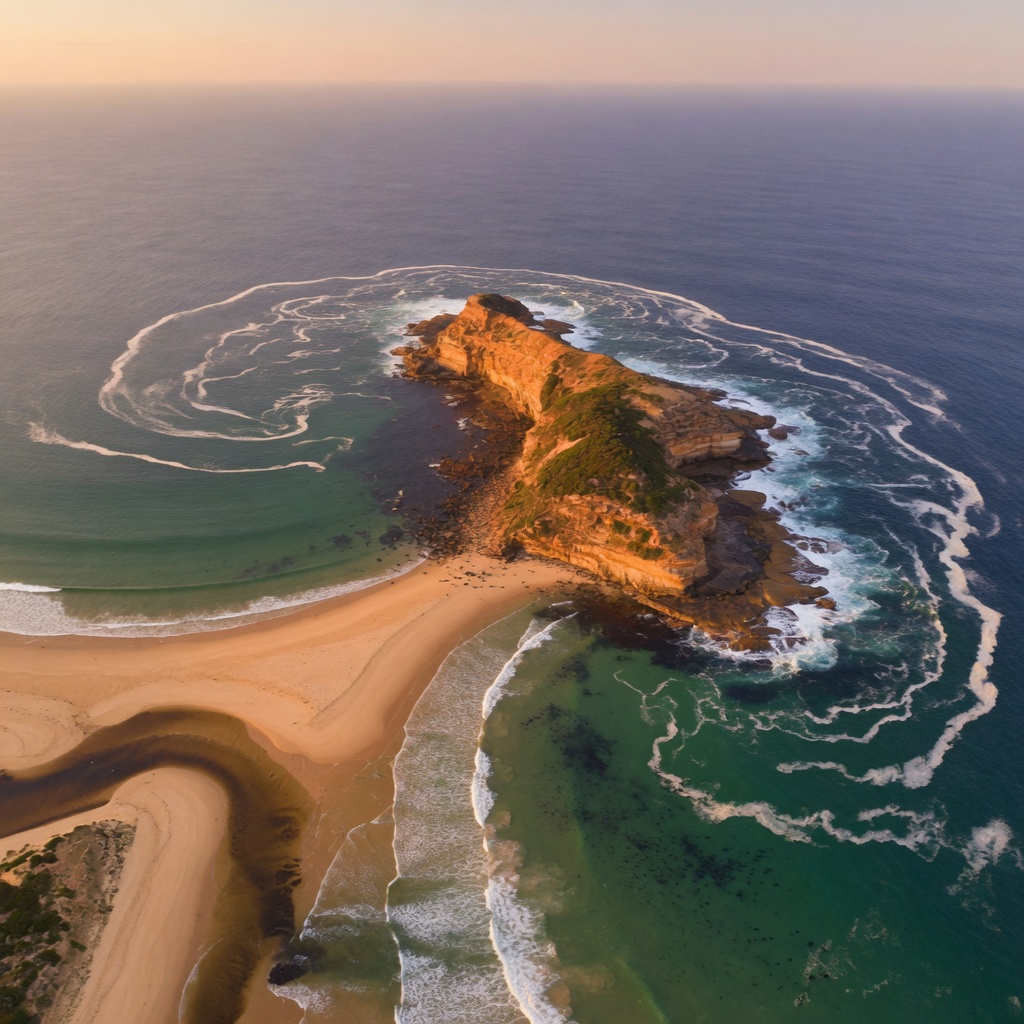
Along ocean rock platforms, the interaction between swell, tide and the prevailing current creates the features fish use. Look for the seam where whitewater meets clean moving water, and for the back eddy behind a headland where current pushes past and folds back on itself. Bait gets trapped in those seams, and drummer, bream, tailor and kingfish patrol them.
On the beach, longshore drift and rip currents do the same job on a smaller scale. A rip is a river running out through the bar, and it carries food with it. Fish the edges of the rip rather than the fastest water, and note how the drift shifts as the tide turns. If your sinker rolls constantly, either move to slower water or increase weight so your bait sits in the strike zone instead of sweeping past it.
Estuary Flow: The Small-Scale Version
Inside the harbour and coastal rivers, tidal flow is your current. The principles hold: fish face into moving water, sit behind structure that breaks it, and feed hardest when flow concentrates bait through a narrow point. Bridge pylons, drains, channel edges, oyster racks and the deep side of a bend all create predictable pressure changes. A run-out tide over a flat that has been baking in the sun also carries warmer water into deeper holes, which can trigger a short but intense bite.
Practical Planning Checklist
- Check the tide chart first and pick two or three hours around a tide change.
- Overlay wind: current running against wind stacks up a short, sloppy chop that makes rock and boat fishing uncomfortable and sometimes dangerous.
- Check swell height and period. Long-period swell wraps into bays and washes over ledges that look safe at first glance.
- Note water temperature trends over the previous week, not just today's number.
- Have a sheltered backup location for when the current, wind and swell all line up the wrong way.
Safety Comes Before Any Bite Window
Moving water is the single biggest hazard for coastal anglers. Never turn your back on the sea from a rock ledge, wear a life jacket, tell someone your plan and expected return time, and accept that some days the conditions simply say no. A cancelled trip costs nothing compared with the alternative.
Keep Your Own Records
The most valuable current data you will ever own is your own logbook. Record date, tide stage, moon phase, wind, swell, water colour, temperature and what you caught. After a season you will start to see which combinations reliably produce at your favourite marks, and that local pattern beats any generic advice.
Want to compare notes or ask about conditions on a particular stretch of coast? Reach Tide Fishing on +61292658222 or [email protected] during Mon–Fri: 09:00 – 17:00 (AEST), and browse our tide, swell and moon phase pages for Sydney before your next session.
Navigation
See also
FAQ