Understanding Current Lines and Fish Holding Areas
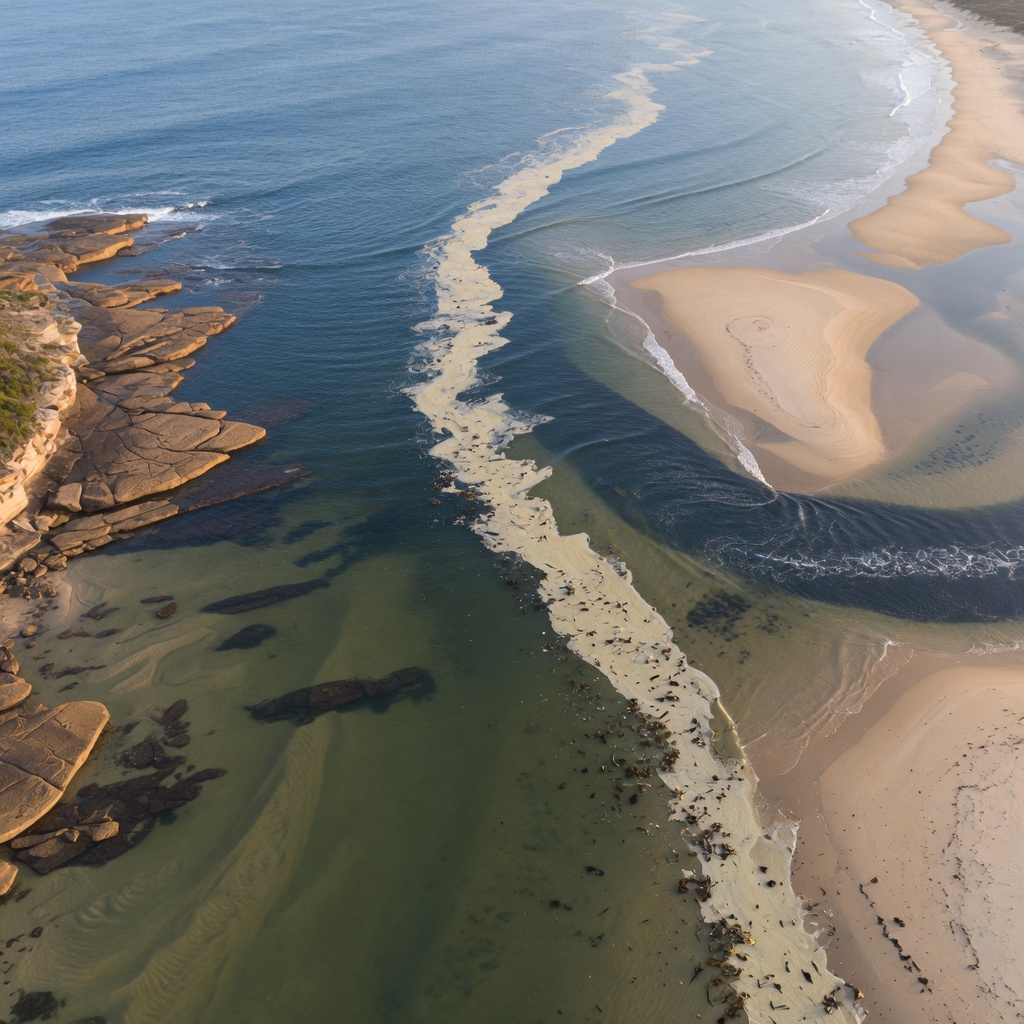
What a Current Line Actually Is
A current line is the visible seam where two bodies of water meet and move at different speeds. On the water it shows up as a ribbon of foam, a slick of flat water beside rippled water, a line of weed and leaf litter, or a colour change from clean blue to tannin-stained green. Along the Sydney coast these seams form wherever tide, swell and wind push water in slightly different directions — outside harbour headlands, across the mouths of estuaries, and along the edge of rip channels on open beaches.
The seam matters because it concentrates food. Plankton, prawns, small baitfish and drifting debris all collect on the slower side of the line, and predators sit just below or just off the edge waiting for the conveyor belt to deliver. Once you can see the line, you have narrowed a huge stretch of water down to a cast-sized target.
How Tide Builds and Breaks Holding Water
Fish holding areas are usually created by a change in speed, not by depth alone. Water accelerating over a sandbar, around a rock point or through a bridge span leaves a pressure pocket behind the obstruction, and that pocket is where fish can hold without burning energy. Work through the tide with this in mind:
- Early flood: water pushes into estuary flats and gutters. Fish follow the leading edge, so target the first drop-off inside the mouth.
- Mid flood and mid ebb: the fastest flow. Look for eddies behind points, bridge pylons and rock bars, and cast upcurrent so the bait drifts naturally into the seam.
- Top and bottom of the tide: slack water. Move to deeper holes, wharf shadow lines or the outer edge of a beach gutter where some flow remains.
- Late ebb: water drains off flats carrying prawns and crabs. The mouth of any drain, creek or gutter becomes a funnel worth fishing hard.
Reading Beach Gutters and Rips
Stand above the beach before you rig up and watch three sets of waves. A gutter appears as a darker, calmer strip where waves do not break; a rip is the outgoing river of water leaving through a gap in the bank. The productive water is the shoulder of the rip and the mouth of the gutter, not the middle of the white water. Cast so your bait sits on the edge of the moving water and let the sinker hold the seam rather than dragging across it. Rising tide over a shallow bank often turns a dead-looking beach into feeding water within twenty minutes.
Estuary Seams and Structure
In harbours and estuaries the holding areas are usually easier to see: mangrove edges, oyster racks, weed bed margins, drop-offs from sand to mud, and the shade line under moored boats or wharves. Fish sit on the current side of the structure at the start of the flow and move behind it as the tide strengthens. If you catch nothing in fifteen minutes, shift ten metres rather than changing lures — position beats presentation more often than most anglers expect.
Rock Ledges, Swell and Safety
Rock platforms produce the strongest current lines of all, because swell surging along the stone creates persistent white water and a defined foam edge. That foam line, sitting two to fifteen metres off the ledge, holds bait and predators. Fish it with a float or a lightly weighted bait that stays in the wash. Always check swell height, swell period and wind before you go, watch the ledge for at least fifteen minutes, wear a life jacket and cleated boots, never fish alone, and walk away if water is washing across your platform. A long-period swell of modest height can be far more dangerous than a bigger short-period sea.
Wind, Moon and Water Clarity
Wind against tide steepens the seam and often improves the bite, while wind with tide flattens the line and spreads fish out. A light offshore breeze usually gives the cleanest presentation on open beaches. Around the new and full moon, larger tidal ranges mean faster flow and stronger, better-defined current lines — good for short, sharp sessions timed to the middle of the tide. Neap tides around the quarter moons suit slower, more patient fishing in deeper holes. Note water clarity too: a defined colour change after rain is a classic holding edge for predators hunting disoriented bait.
A Simple Session Plan
- Check the tide chart, swell and wind forecast on Tide Fishing the night before and pick a two-hour window either side of a tide change.
- Arrive early, spend ten minutes reading foam lines, colour changes and gutters before casting.
- Fish the seam first, the structure behind it second, and the open water last.
- Keep a short log of location, tide stage, moon phase and result so patterns build over a season.
Questions about conditions in Sydney? Reach us on +61292658222 or [email protected] during Mon–Fri: 09:00 – 17:00 (AEST).

Navigation
See also
FAQ