Best Time of Day to Fish Different Australian Coasts
Why "Time of Day" Means Something Different on Each Coast
Ask ten anglers in Sydney when to fish and most will say dawn. They are usually right, but the reason has less to do with the clock than with light angle, water temperature and the way each coastline sits against the sun, swell and prevailing wind. Australia is wrapped by very different coasts: a steep east coast that faces the sunrise and takes long-period Pacific swell, a cool southern coast exposed to Southern Ocean weather, a west coast where the sun sets over the water and afternoon sea breezes dominate, and a tropical north where enormous tides outrank everything else.
On Tide Fishing we treat time of day as one layer in a stack: light, tide stage, moon phase, wind and swell. Get two or three of those layers overlapping and an ordinary spot becomes a good one.
East Coast: Sunrise Advantage and the Sydney Pattern
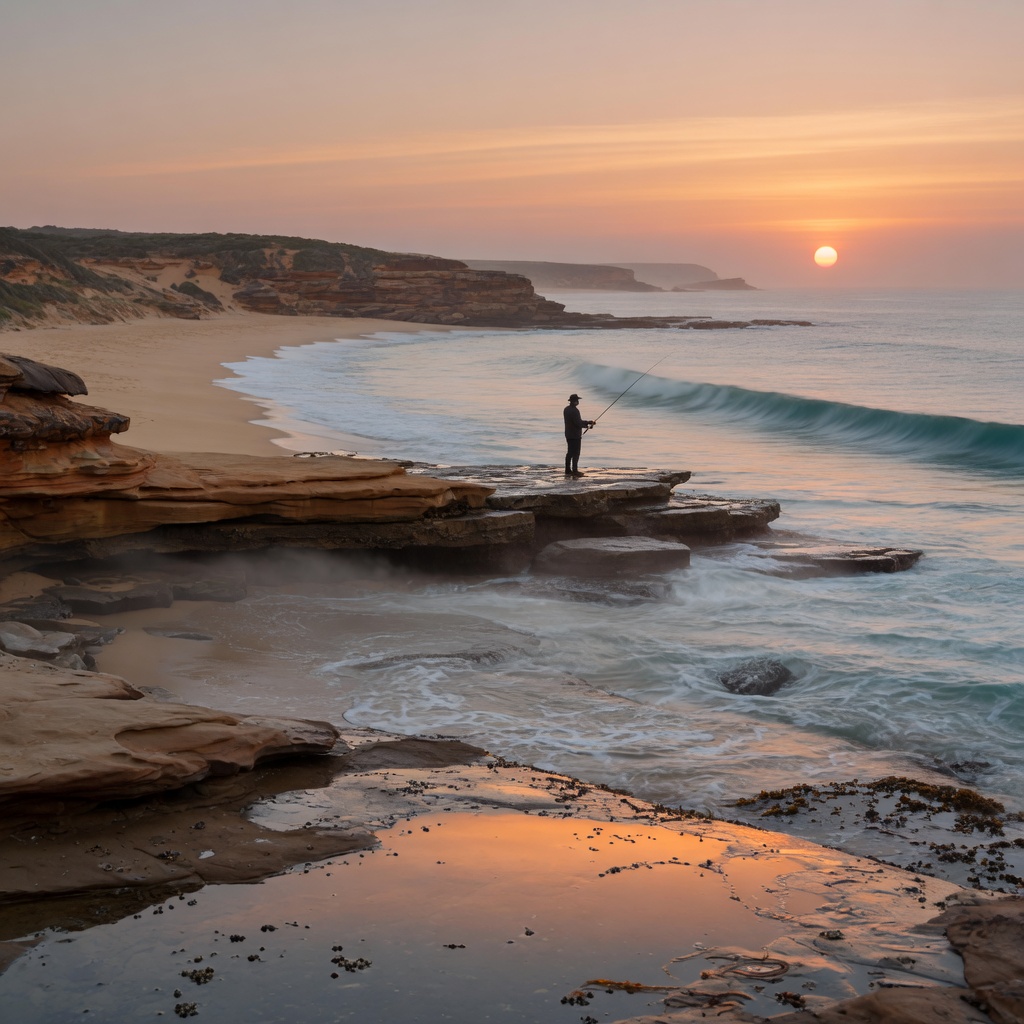
Because the east coast faces the rising sun, first light arrives on the water before it warms the sand. Baitfish schools that have held in deeper water overnight push into the wash and along gutters in that low-light window, and predators such as tailor, salmon, bream and kingfish follow. From Sydney's northern beaches to the sandstone headlands south of the harbour, the first ninety minutes of daylight is the most reliable session of the day.
- Beach fishing: aim for dawn coinciding with the last two hours of a rising tide, so gutters and holes have enough water for fish to move in confidently.
- Rock fishing: the safest and often most productive window is early morning with a small swell and light offshore breeze, before the nor'easter builds.
- Estuaries: in the Hawkesbury, Georges River and Botany Bay systems, the top and first hour of the outgoing tide at dawn or dusk concentrates fish around drop-offs and weed edges.
Sunset works too, especially in summer when the sea breeze drops away and the water is warmest. In Sydney the pattern is often dawn for structure and predators, dusk for surface feeders and estuary flats.
Southern Coasts: Mid-Morning Can Beat Dawn
Along Victoria, South Australia and Tasmania, water is cooler and often deeper close in. In winter a shallow estuary or bay flat may need a few hours of sun before fish become active, so mid-morning to early afternoon can outfish first light. Wind is the limiting factor rather than heat — plan around the passage of cold fronts and fish the calm, high-pressure day that follows.
Practical timing on southern shores
- Fish the leeward side of a bay or headland when a strong westerly is running.
- Look for the tide change that falls in the warmest part of a winter day.
- After a big swell event, give exposed beaches a day to settle, then fish the clearing water.
West Coast: Afternoon Light and the Sea Breeze Clock
In Western Australia the sun sets over the ocean, so evening light lasts longer on the water and dusk sessions are strong. The complication is the afternoon sea breeze, which can arrive hard by early afternoon and stay until sunset. Many west coast anglers fish very early to avoid it, then return for the final hour of daylight once the breeze eases. Rock and ledge fishing in particular should be timed to the calmest part of the day, with swell height checked carefully first.
Northern Australia: Tide Beats the Clock
Across the Kimberley, Top End and far north Queensland, tidal range can be several metres. There, the state of the tide matters far more than whether it is 6am or 2pm. Barramundi, mangrove jack and threadfin sit on structure where current pushes bait past them, so the productive window is the middle of a running tide — the hours of strongest flow — plus the slack turn at creek mouths and drains. Night sessions can be excellent in the wet season heat, and moon phase drives tide size, so large spring tides suit some systems while smaller neap tides suit clearer, snag-heavy creeks.
How Coastal Geography Shapes the Habitat You Fish
Timing only pays off if you are standing in the right place. Read the shape of the coast first:
- Gutters and rips on open beaches hold fish through the rising tide; look for darker water, foam lines and a break in the wave pattern.
- Rock platforms and washes concentrate food where swell moves over kelp and boulders — best on a moderate swell, never a rising or unpredictable one.
- Estuary channel edges, weed beds and oyster racks feed fish on tidal flow, with the first push of a flood tide bringing bait onto the flats.
- Headlands and points create eddies where current separates; fish the calm side of the pressure line.
Building Your Own Session Plan
Before heading out, check tide times and heights, moon phase, swell height and period, and wind direction and strength. Then pick a spot that suits those numbers rather than forcing a favourite spot to work. A short list of three options — one open beach, one sheltered estuary and one headland — means you can fish safely in almost any forecast.
Safety first on rocks and beaches: wear a life jacket and appropriate footwear, watch the sea for at least ten minutes before committing to a ledge, never fish alone in exposed conditions, and abandon a spot if the swell is building. No tide chart is worth a risk.
Questions about local timing around Sydney? Reach us on +61292658222 or [email protected] during Mon–Fri: 09:00 – 17:00 (AEST), and browse the tide, swell and moon phase guides across Tide Fishing to plan your next session.

Navigation
See also
FAQ