Using Berley Effectively in Saltwater
Why Berley Works Around Sydney
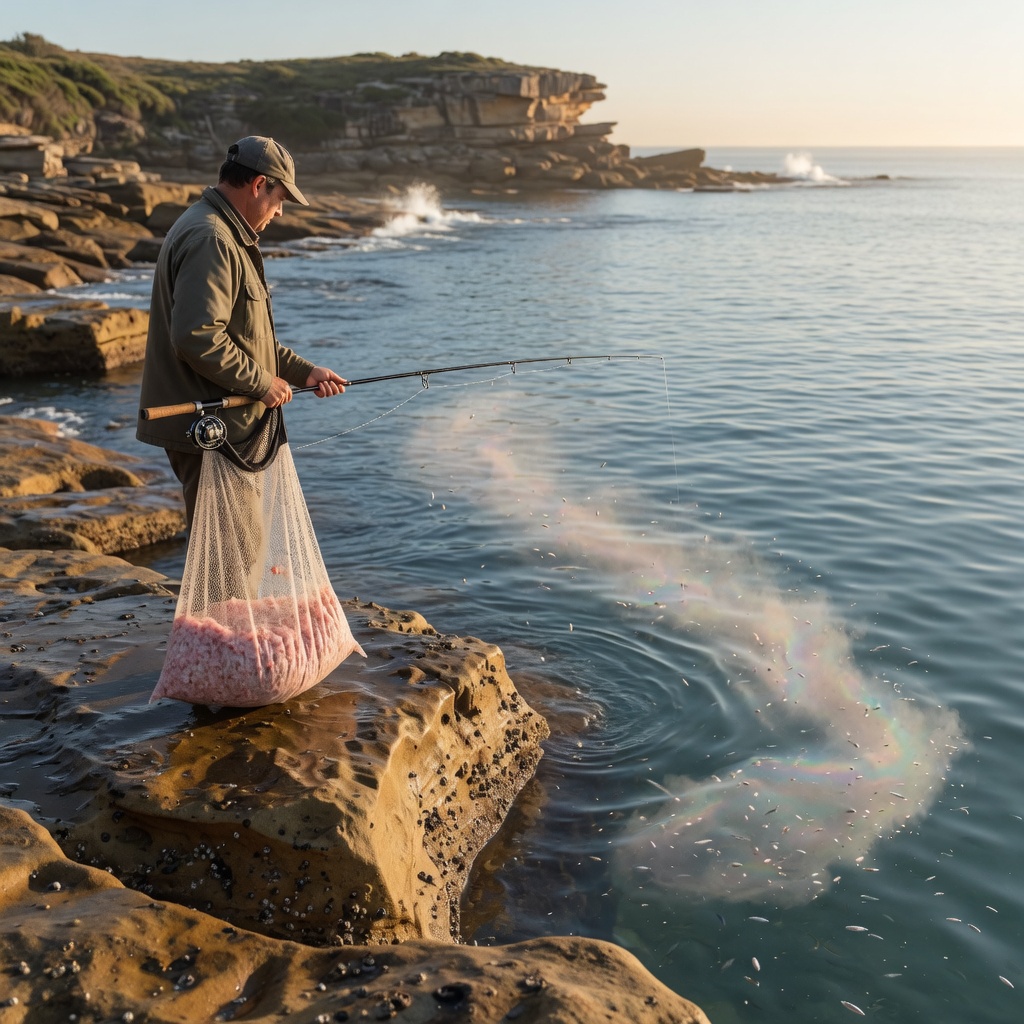
Berley — the mix of minced fish, bread, pellets and oil that you drift into the water to draw fish in — is one of the cheapest and most reliable edges available to a shore or boat angler. Around Sydney, where headlands, sand gutters and estuary channels all sit within a short drive of each other, a well-managed berley trail turns a quiet session into a productive one. It does not create fish out of nothing. What it does is bring fish that are already nearby up the current, hold them in a small area, and switch them from cautious picking to competitive feeding.
The single most important idea is this: berley is a trail, not a meal. Your goal is a steady stream of tiny particles and scent moving away from you with the current, leading fish back to your baited hook. Dumping a bucket of pilchard mash at your feet feeds the fish, buries your hook and ends the bite.
Reading Tide and Current Before You Start
Berley only works if you know where the water is going. Check the tide chart for your spot first and stand on the up-current side of the ground you want to fish, so the trail washes over the structure rather than away from it.
- Run-out tide in an estuary: berley from the shallow flats or a bridge pylon and let the trail sweep down into the deeper channel where bream, whiting and flathead are sitting.
- Run-in tide: position yourself where fresh ocean water is pushing over sand or weed beds; the trail spreads wide and slow, which suits luderick and bream.
- Rock ledges: use the wash and swell surge to do the mixing for you. A small amount of berley into white water disperses further than a heavy dose into flat water.
- Slack water: the hardest time to berley. With no current, particles sink straight down, so cut the volume right back and rely on scent and oil instead.
Match your berley effort to the strongest part of the tidal run — usually the middle two hours of the flow. That is also when most predators are actively hunting.
Mixes for Different Target Species
Estuary Bream, Whiting and Trevally
Fine and light. Breadcrumbs, chopped prawn heads, a handful of chicken pellets and just enough tuna oil to hold scent. Keep the pieces smaller than your bait so fish keep searching rather than filling up.
Luderick and Blackfish
Weed-based berley: chopped green weed or cabbage mixed with sand so it sinks into the wash zone and stays put on the bottom near the ledge.
Beach Fishing for Salmon, Tailor and Bream
Coarse mash worked into the back of a gutter on a rising tide. Fresh pilchard or slimy mackerel cut small, held together with bread, dropped in small handfuls between casts.
Offshore and Boat Work
A frozen berley block in a bag over the transom is the simplest method. Keep the drip slow and consistent so the trail stays unbroken for the whole drift, and always cast baits or lures back into it rather than beside it.
Delivery: Rate, Timing and Discipline
- Start small — a pinch every couple of minutes for the first fifteen minutes while you watch how the water carries it.
- Once fish show, hold that exact rate. Increasing it usually kills the bite.
- Never berley heavily and then stop. Fish leave and the ground goes flat.
- Keep hook baits identical to what is in the trail. Mismatched bait is the most common reason berley fails.
- Fish sinking, unweighted baits inside the trail line whenever conditions allow.
Wind, Swell and Safety Considerations
Onshore wind and heavy swell will scatter a trail before it does any work, so on rough days concentrate berley into the calmer corners of a bay or the lee side of a headland. Check swell height and period before any rock session — no bite is worth standing on a washed ledge. In strong wind, a bucket with a lid and a long-handled scoop saves your gear and your clothes.
Keeping It Clean and Considerate
Store berley in a sealed container, mix it away from other anglers, and rinse rocks, boat decks and cleaning tables afterwards. Do not leave unused berley on the sand or in a rock pool. Use bait sourced legally and follow current NSW fishing rules on bag limits, closures and gear.
For local tide, moon phase, swell and wind updates before you head out, check the daily conditions pages on Tide Fishing. Questions about a spot or a mix? Reach us on +61292658222 or [email protected] during Mon–Fri: 09:00 – 17:00 (AEST) — we are happy to talk through what is working around Sydney at the moment.

Navigation
See also
FAQ