Top Fishing Destinations on Australia's West Coast
Why the West Coast Rewards Careful Planning
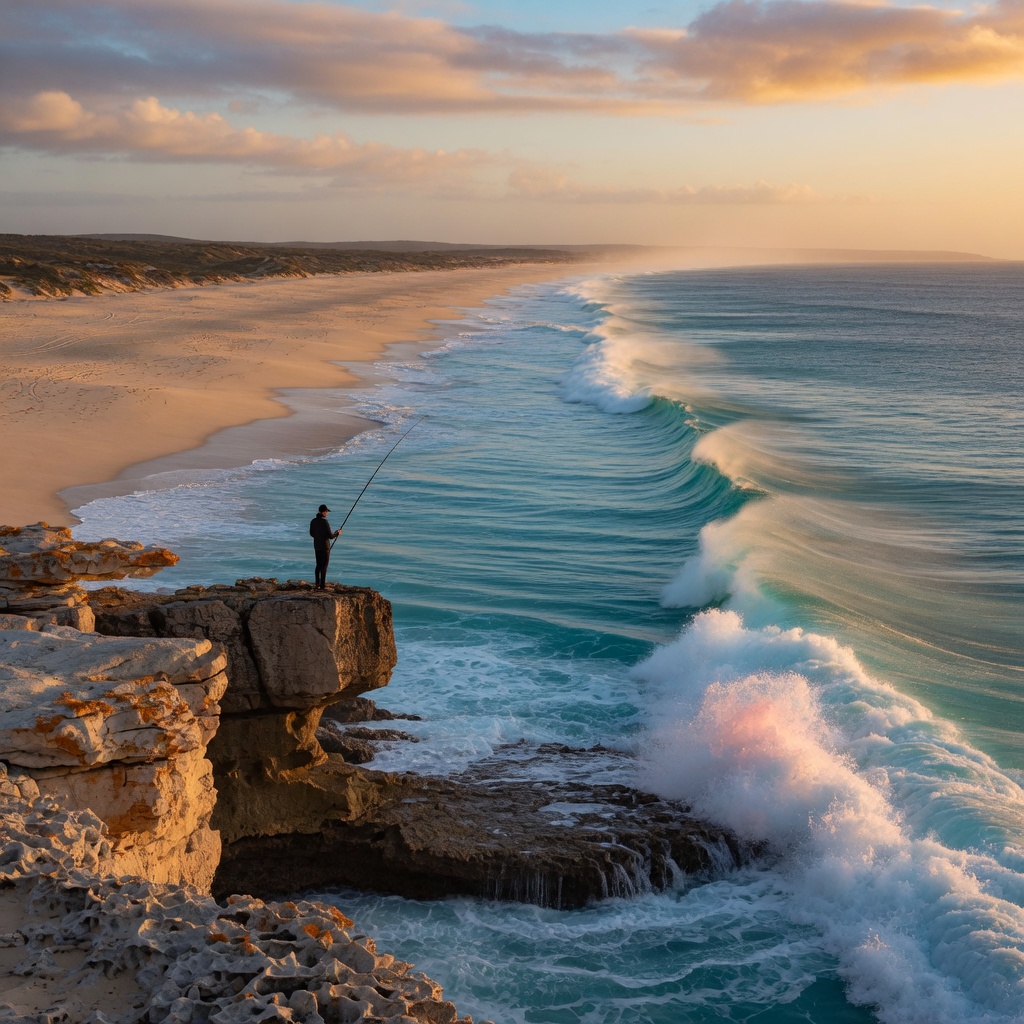
Western Australia offers one of the longest, least crowded coastlines in the country, but it is also the most exposed. Long-period swell rolls in from the Indian Ocean, the afternoon sea breeze — the famous "Fremantle Doctor" — builds like clockwork through summer, and tidal ranges vary enormously between the south-west and the far north. For anglers travelling from Sydney, the biggest mistake is treating the west like the east: the timing rules are different, and reading conditions before you commit to a long drive matters more than the gear in your rod tube.
At Tide Fishing we approach every destination the same way: check the tide chart, check the swell height and period, check wind direction and strength, then match the location to what the ocean is actually doing that day. The list below is arranged so you can pick a spot that suits the forecast rather than hoping the forecast suits your spot.
South-West: Beaches and Rock Ledges
The stretch from Bunbury down around Cape Naturaliste and across to Albany is classic beach and rock country. Long surf beaches with well-defined gutters hold tailor, herring and mulloway, while granite headlands give access to deeper water without a boat.
- Beach sessions: Aim for the two hours either side of high tide, ideally overlapping dawn or dusk. A modest 1–1.5 m swell keeps gutters working without turning the wash into soup.
- Rock ledges: Treat long-period groundswell with real caution. If the period is 14 seconds or more, waves arrive with far more force than the height suggests. Watch a ledge for a full fifteen minutes before stepping down.
- Wind: Early mornings are usually glassy in summer. Once the sea breeze fills in from the south-west, shift to a north-facing bay for shelter.
Perth Metro and the Swan River Estuary
Estuary fishing is the reliable fallback when the ocean is unfishable. The Swan and Canning systems produce bream, flathead, tailor and mulloway within easy reach of the city, and they fish well in wind that would shut down any open beach.
In estuaries, water movement beats tide height. Concentrate on the middle of a running tide, when current pushes bait past structure — bridge pylons, drop-offs, weed edges and the mouths of feeder drains. A run-out tide after rain concentrates fish at the edge of dirty and clean water. Neap tides suit finesse work on bream; bigger spring tides suit chasing predators on the move.
Mid-West: Jurien Bay, Geraldton and the Abrolhos Region
North of Perth the coast opens into reef systems, limestone platforms and sheltered bays. Land-based anglers find good access at Jurien Bay and around Geraldton, while boat anglers work offshore reefs when the swell allows. Autumn tends to offer the best balance of lighter winds and warm water.
- Check swell direction, not just height — a south-west swell wraps into some bays and misses others entirely.
- Plan offshore runs around morning windows before the breeze builds past 15 knots.
- Fish reef edges and pressure points on the last of the flood tide.
Ningaloo, Exmouth and the Gascoyne
Ningaloo Reef sits remarkably close to shore, which makes it one of the few places in Australia where serious sportfish are within casting range of the beach. The reef also means tidal flow across gutters and channels is the key variable. Fish the outgoing tide where water funnels off the flats, and use the moon phase to your advantage: the days either side of a new or full moon bring stronger flow and more predictable feeding windows.
Remember that Ningaloo includes sanctuary zones with strict rules. Always confirm current zoning and bag limits with the relevant state fisheries authority before you fish.
The Kimberley and Broome
Tides here are on another scale — ranges of many metres transform the landscape twice a day. Creek mouths that hold barramundi and threadfin at half tide become mudflats at low water. Plan every session backwards from the tide chart, allow generous margins for getting a boat back to a ramp, and never anchor where a falling tide could strand you. The dry season offers the most stable weather.
Building a Trip Plan That Works
- Pick your dates first, then check moon phase — spring tides around new and full moons suit estuaries and northern creeks.
- Shortlist three locations per day: one exposed, one semi-sheltered, one estuary.
- Review swell height and period plus wind direction the evening before, then choose.
- Log what you catch against the conditions. Two seasons of notes beats any general rule.
Want help interpreting a forecast for a specific stretch of coast? Contact Tide Fishing on +61292658222 or [email protected] during Mon–Fri: 09:00 – 17:00 (AEST) and we will talk you through the tide and swell windows.

Navigation
See also
FAQ