Reading Water Colour to Locate Feeding Fish
Why Water Colour Matters More Than the Forecast
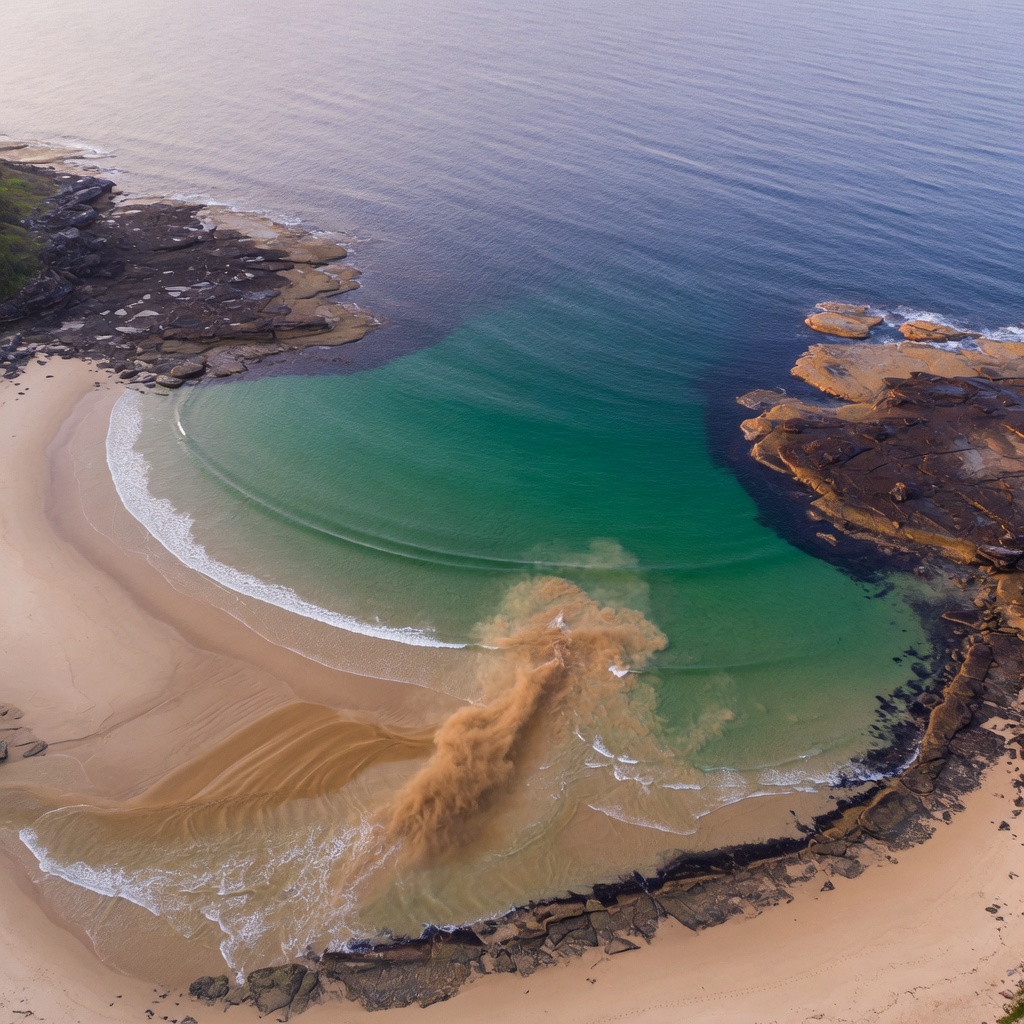
Plenty of anglers around Sydney check the swell height and the tide time, then drive to the beach and cast into whatever is in front of them. Water colour is the missing step. Colour tells you where sand is moving, where fresh water is entering the system, where plankton and bait are holding, and how much light is reaching the bottom. On the same stretch of beach you can have coffee-coloured wash in one gutter and clean green water fifty metres along — and the fish will almost always be sitting on the seam between them.
Water colour is a live report on conditions. Tide charts and moon phase tell you when to be there; colour tells you where to stand.
The Main Colours and What They Mean
- Deep blue: clean oceanic water, often after several days of light offshore wind. Low nutrient, low bait, very high visibility. Fish sit deeper, feed harder at dawn and dusk, and spook easily. Go lighter on leader and longer on casts.
- Green: the sweet spot for most beach and rock fishing. Green water carries plankton and bait while still giving fish enough visibility to find a lure or bait. Bream, tailor, salmon and kingfish all work green water happily.
- Milky or pale aqua: suspended fine sand from recent swell. Bottom-feeding species love it because the wash is dislodging worms, pipis and small crabs. Fish it close — sometimes only a few metres out.
- Brown or tea-coloured: tannin-stained run-off from creeks and mangrove flats. Common in Sydney estuaries after rain. Fish still feed, but they rely on vibration and scent, so slow down and use noisier or smellier presentations.
- Grey-brown and thick: heavy sediment. Gills clog and fish move out or drop to the edges. Look for the boundary rather than the middle of the plume.
Reading the Seams
The most productive water is rarely a single colour. Look for the colour change line where dirty meets clean. Predators sit in the clean side and ambush bait that drifts out of the murk. On a rock platform this line often forms downcurrent of white wash; on a beach it forms at the mouth of a gutter on the falling tide.
How Tide, Swell and Wind Change the Colour
Colour is not fixed — it swings with the tide. On the last two hours of the ebb, estuary water pushes out through the entrance, carrying darker, warmer, nutrient-rich water into the ocean. On the flood, cleaner ocean water pushes back in and often lifts visibility a metre or more inside the harbour and lower reaches of rivers.
- Rising swell: stirs sand, dirties the shore break, pushes fish wider. Fish the outer edge of the discoloured band.
- Falling swell after a blow: classic beach fishing. Water is still slightly milky, food is loose in the wash, and fish move right into the gutters.
- Strong onshore wind (north-east through south-east): packs weed, foam and suspended sand into the corners. Fish the cleaner headland side.
- Offshore wind (westerly): flattens and cleans the surface quickly. Expect very clear water and cautious fish.
- After heavy rain: upper estuary goes brown and fresh. Drop downstream toward the salt wedge, where the brown layer sits over cleaner salt water.
Practical Checks Before You Cast
Spend five minutes looking before your first cast. Stand high — a dune, a rock ledge, a bridge — and use polarised sunglasses with the sun behind you. Note three things: the darkest patch (usually deeper water or weed), the lightest patch (shallow sand), and the line between them. Then check depth of colour by wading a few steps and looking at your boots or a light-coloured lure. If you lose sight of a white lure at half a metre, you are in low-visibility water and should switch to dark silhouettes, rattles or scented baits.
Matching Presentation to Colour
- Clear blue-green: natural colours, fluorocarbon leader, small profiles, longer casts.
- Milky: white, pink or chartreuse, slightly larger profile, work close to the wash.
- Tannin brown: black, purple or gold, add vibration, fish structure edges tightly.
- Heavy sediment: strong scent baits, static presentations, wait for the tide to clean it up.
Sydney Coastal Geography and Habitat Notes
The Sydney coast alternates between sandstone headlands and pocket beaches, which means colour boundaries form in predictable places. Headlands create back-eddies where discoloured water collects on one side and stays clean on the other. Estuary entrances create plumes that fan out on the ebb. Reef and weed beds show as dark irregular patches that hold prawns, crabs and small baitfish — the difference between weed and shadow is that weed keeps its shape when a swell passes over it, while shadow moves.
Keep a simple log of colour, tide stage, swell direction and what you caught. Within a season you will recognise the exact combinations that fire on your local beach, and you will stop guessing.
More Help
Tide Fishing publishes tide, moon phase, swell and wind guidance for Sydney anglers. Questions about a particular beach, estuary or rock platform can be sent to [email protected] or +61292658222 during Mon–Fri: 09:00 – 17:00 (AEST). Always check current conditions and fish rock platforms only when the swell is genuinely safe.

Navigation
See also
FAQ