Packing the Ultimate Australian Fishing Day Bag
Why the Day Bag Matters More Than the Rod
Around Sydney you can fish a sheltered estuary flat at dawn, walk a beach gutter by mid-morning and be standing on a rock ledge as the swell builds in the afternoon. Each of those environments asks something different of your kit, and the difference between a comfortable session and an early trip home usually comes down to what is in your bag rather than what is on your reel. A well-packed day bag lets you follow the tide instead of being stuck in one spot.
The goal is a bag you can lift with one hand, carry over wet rocks, and open without spilling half of it into the sand. Think in layers: core tackle, terminal tackle, tide and weather gear, food and water, then safety. If an item does not fit one of those five groups, leave it in the car.
Core Tackle: Keep It Lean
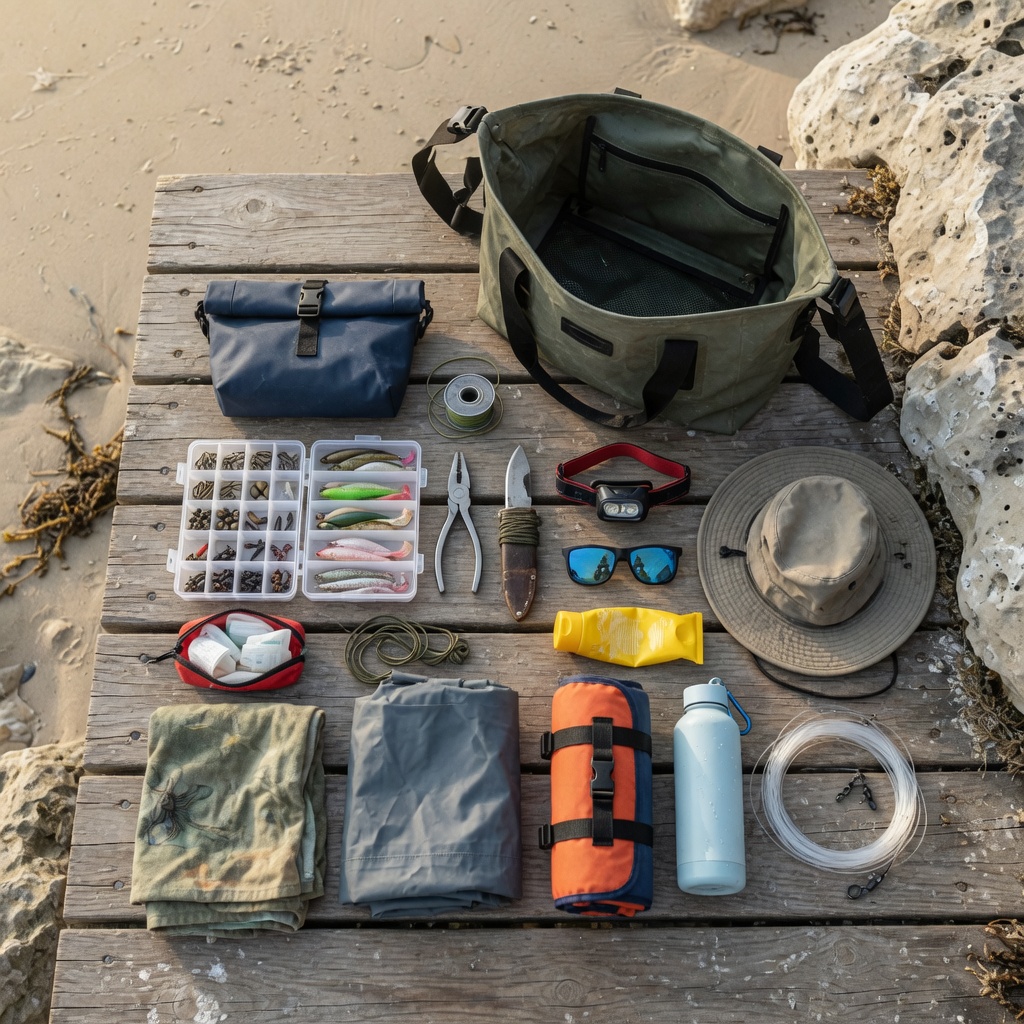
Two small flat trays beat one giant tackle box. Pack a lure tray and a bait tray so you are not digging through soft plastics when you want a sinker.
- Hooks — a spread of sizes for whiting and bream through to tailor and salmon.
- Sinkers — ball, bean and star sinkers; heavier options for beach gutters and moving tide.
- Leader — two spools of fluorocarbon, one light for clear estuary water and one heavy for rock ledges and reef edges.
- Swivels, clips and rigs — pre-tied rigs in resealable bags save fumbling in wind or low light.
- Lures — a handful of metals for whitewater and pelagics, small vibes and plastics for estuary work.
Tools You Will Actually Use
- Long-nose pliers and side cutters
- Fish measuring tape or brag mat to check legal lengths
- Knife and a small cutting board for bait
- Head torch with fresh batteries for pre-dawn and dusk bites
- Rag or small towel — sand and slime get everywhere
Packing for Tide, Swell and Wind
Before you zip the bag, check the forecast and let it shape your load. A rising tide over a shallow estuary flat suits light gear and long leader. A big beach swell with a strong southerly means heavier sinkers, a longer rod and spare rigs, because you will lose some. A moon phase near full or new brings stronger tidal flow, so add extra weight options.
For rock fishing, wind and swell direction decide whether a ledge is safe at all. Pack spikes or cleated boots, a lightweight rain shell and a dry bag for your phone. If the swell forecast is trending upward through the day, plan to be off the low ledges before the tide peaks.
Offshore and Boat Fishing Extras
Heading beyond the heads changes the list. Space on a small boat is tight, so use soft bags that squash into lockers rather than hard cases.
- Sun protection — broad hat, polarised sunglasses, long sleeves and sunscreen; glare offshore is relentless.
- Ice and an esky — chilling your catch immediately protects eating quality on a warm day.
- Heavier terminal tackle — bigger jigs, paternoster rigs and a gaff or large landing net.
- Seasickness preparation — take what works for you before you leave the ramp, not after.
- Safety gear — lifejacket for every person aboard, marine radio, and a charged phone in a waterproof pouch.
- Weather awareness — note the wind change time; a sea breeze against an outgoing tide can build steep chop across a bar quickly.
Food, Water and Comfort
Australian conditions punish the unprepared. Carry more water than you think you need, especially on exposed beaches and rock platforms where there is no shade. Simple food that survives heat works best — wraps, fruit, nuts and something salty. Add a spare cap, a lightweight seat pad for long soaks, and a small rubbish bag so nothing is left behind on the sand.
A Five-Minute Pre-Trip Routine
Lay the bag out the night before and run through it in order: rod and reel checked, line refreshed at the tip, tackle trays sorted, tide and swell times noted, water and food packed, safety gear on top where you can reach it. Tell someone where you are going and when you expect to be back — a habit worth keeping for every rock and offshore session.
For more local guidance on reading tide charts, moon phases and swell forecasts around Sydney, explore the rest of Tide Fishing. Questions about this checklist can be sent to [email protected] or asked by phone on +61292658222 during Mon–Fri: 09:00 – 17:00 (AEST).

Navigation
See also
FAQ