Night Fishing Along Australian Beaches
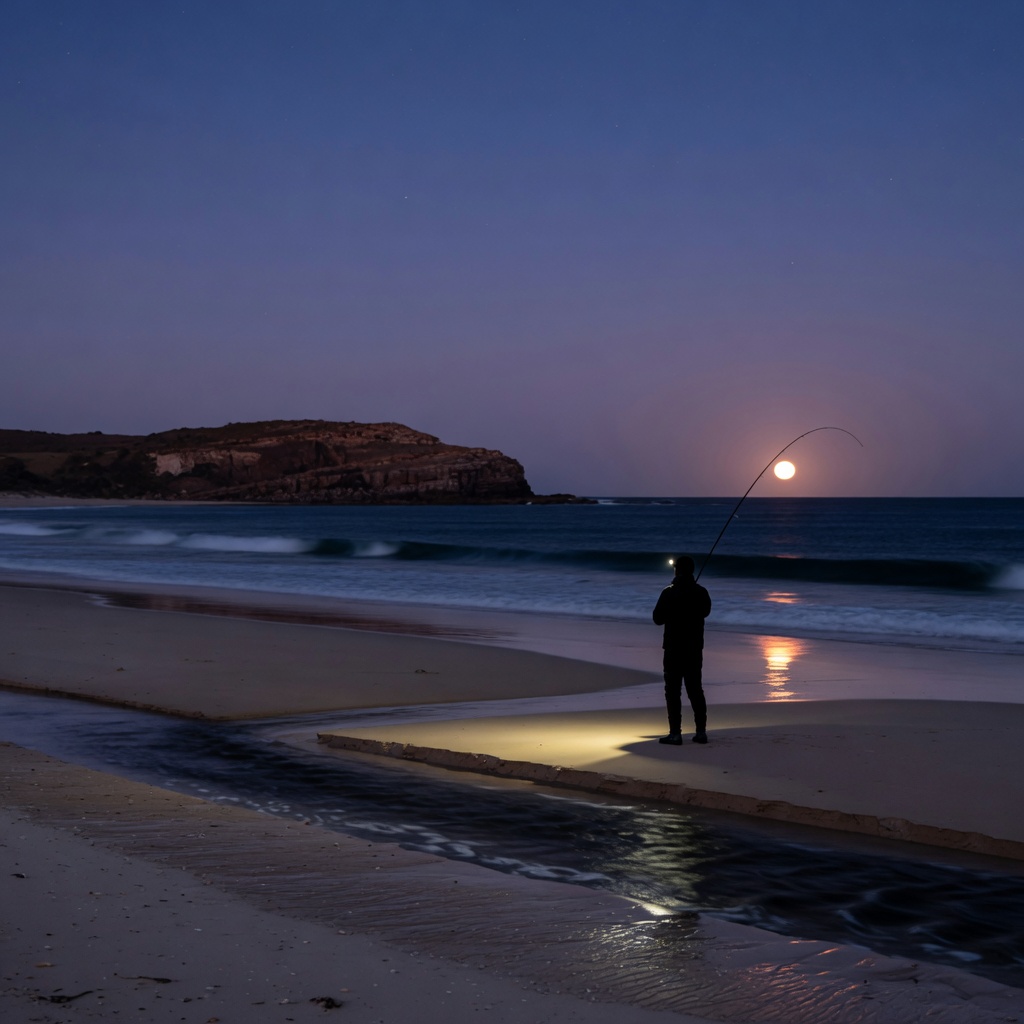
Why Beaches Come Alive After Dark
Once the sun drops behind the headlands, the surf zone changes character. Tailor, salmon, bream, mulloway and the odd flathead move into water that would be far too shallow and too clear in daylight. On the open beaches around Sydney, that shift can happen within twenty minutes of last light, which is why so many experienced anglers arrive an hour early, set up in daylight, and wait rather than trying to read a beach with a torch.
The advantage at night is confidence. Fish patrol the shore break, the edges of gutters and the wash behind sandbars because they feel safe. The disadvantage is that you lose your best tool — your eyes. That is exactly why tide, swell and moon information matters more at night than it does during the day. If you plan the session with numbers before you leave home, you are not guessing in the dark.
Reading the Tide Before You Go
The most reliable night sessions on a surf beach are usually built around a rising tide into the top of the high, especially when high water falls near dusk or a few hours after. A pushing tide floods the gutters, lifts the wash over the bar and pulls beach worms, pipis and small baitfish into reach. As the tide drops away, deeper corner gutters and rip mouths hold their fish for longer than the open beach face.
- Two hours before to one hour after high: best window for bream, whiting and tailor working close in.
- The first hours of the drop: good for mulloway sitting in the deeper trough as water drains out.
- Dead low at night: concentrate on permanent deep holes and rip channels rather than flat beach.
Check the Tide Fishing tide chart for your nearest beach and note the exact time of the turn. Write it on your hand if you must — in the dark, time slips away quickly.
Moon Phase, Swell and Wind
Moon phase changes both light and water movement. A bright full moon lights up the beach, which can make fish shy but makes casting and wading far easier for newcomers. The new moon brings genuine darkness and often the better mulloway and big bream results, but it demands more preparation. The days either side of new and full moon also carry the biggest tidal range, so water moves harder and bait moves with it.
Swell is the safety factor. A clean 0.8 to 1.5 metre swell with a long period shapes gutters nicely and puts oxygen and colour in the water. Above about two metres, most beaches become washed out, the sand shifts and the shore break gets dangerous in the dark. Wind matters too: a light offshore or side-shore breeze keeps the surface manageable and your line under control, while a strong onshore piles weed into the gutters and makes bait presentation almost impossible.
A Simple Pre-Trip Checklist
- Confirm the tide time and height for your beach.
- Check swell height and period, plus wind direction and strength.
- Note the moon phase and moonrise time.
- Walk the beach in daylight and mark gutters and entry points.
- Tell someone where you are going and when you expect to be back.
Gear, Bait and Rigs
Keep it simple. A 10 to 12 foot surf rod with a 4000 to 6000 size reel handles most beach work, spooled with braid or mono suited to the conditions. Running sinker rigs with a single strong hook suit bream and whiting on beach worms, pipis or prawn. For tailor and mulloway, step up to a paternoster or a snelled two-hook set with pilchard, garfish or a fresh strip bait. Metal slugs and shallow-running minnows work well in the wash when tailor are smashing bait under the moon.
- Head torch with a red mode — protects your night vision and spooks fewer fish.
- Rod holder or sand spike — keeps rods out of the wash and off the sand.
- Cooler with ice — bait quality falls apart fast on warm nights.
- Pliers, spare rigs and a cloth — untangling in the dark is a fact of life.
Staying Safe on a Dark Beach
Never turn your back on the water. Fish with a mate where you can, stay clear of steep drop-offs and rip edges, and avoid wading deeper than knee height at night. Rock platforms next to beaches are a different sport entirely and should not be attempted after dark without local knowledge, a life jacket and a genuinely small swell. Respect bag and size limits, handle released fish quickly, and take every scrap of rubbish and line home with you.
Plan Your Next Session With Us
Tide Fishing publishes tide charts, moon phase notes and swell and wind guidance for beaches, estuaries and rock ledges around Sydney and along the wider Australian coast. If you would like help interpreting the conditions for a particular beach, contact us on +61292658222 or [email protected] during Mon–Fri: 09:00 – 17:00 (AEST) and we will point you to the right window.

Navigation
See also
FAQ