How Water Temperature Affects Australian Fish Species
Why Temperature Is the Quiet Driver of a Session
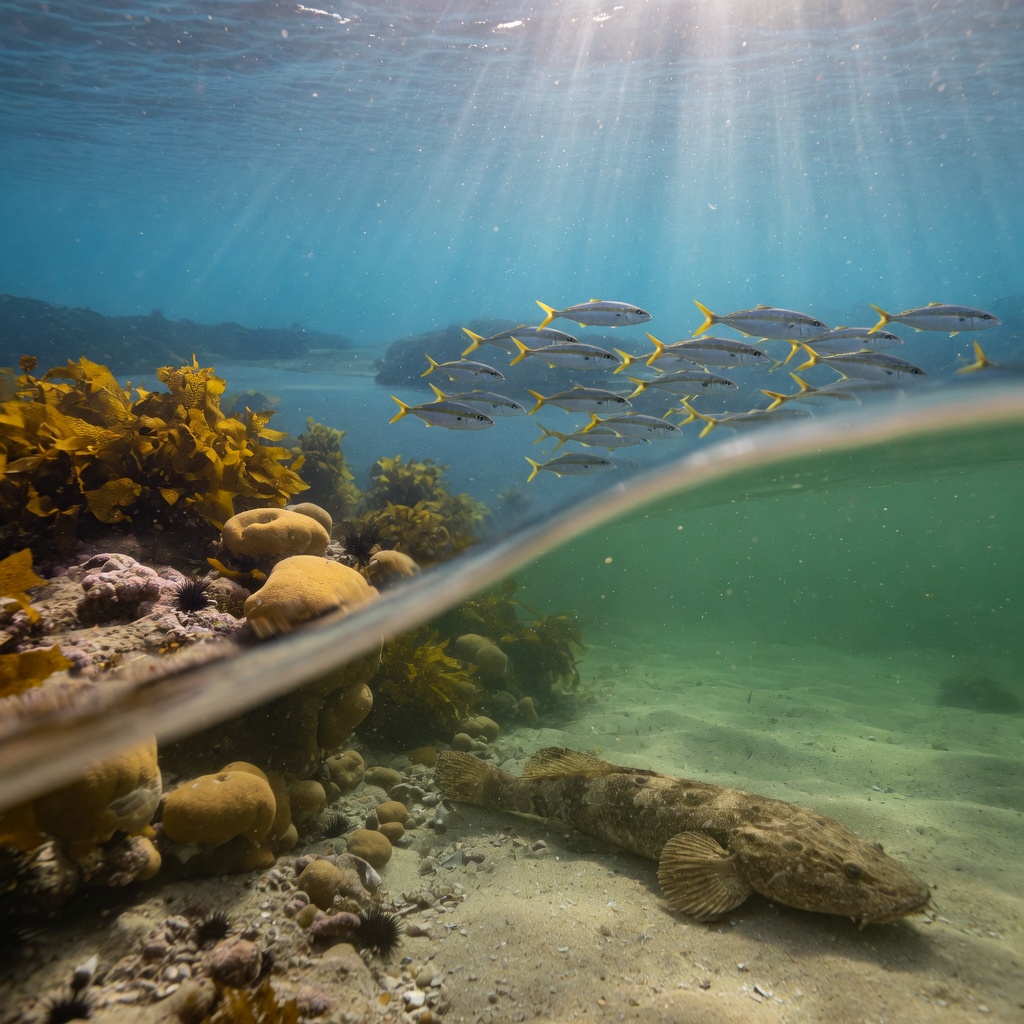
Most anglers plan around tide and wind, then wonder why a proven spot goes quiet for three weeks. More often than not, the answer is water temperature. Fish are ectothermic — their body temperature follows the water around them — so temperature sets their metabolic rate, digestion speed, oxygen demand and, ultimately, how far they will travel to eat a bait or lure. On the Sydney coast a two-degree shift can turn a flat morning into a hot bite, or push a school of pelagics ten kilometres offshore.
At Tide Fishing we treat temperature as the third leg of the planning stool, alongside tide charts and swell. Tide tells you when to be there; temperature tells you what should be there in the first place.
The East Australian Current and Sydney's Coastal Geography
Sydney sits in a transition zone. The East Australian Current (EAC) runs warm tropical water south along the shelf, spinning off eddies that can nudge 22–24°C water close to the headlands in late summer and autumn. Between those pulses, southerly blows and upwellings drag cooler, nutrient-rich water up from depth — sometimes dropping inshore readings several degrees in a day.
Coastal shape amplifies all of this:
- North-facing bays and beaches hold warmth longer and are sheltered from southerly swell, so they often fish better in the cooler months.
- Exposed southern headlands feel upwelling first, which can be a plus for cool-water species and a minus for tropical visitors.
- Shallow sand flats and back estuaries heat quickly on a rising tide over sun-warmed sand, then cool fast overnight — big daily swings.
- Deep holes, rock ledges and bridge pylons act as thermal refuges, staying steadier than the surrounding water.
Preferred Temperature Bands for Common Species
These are general behavioural ranges, not hard rules — local food supply and water clarity can override them.
- Yellowtail kingfish: most active around 18–24°C. Warm eddies pressing against the headlands usually signal the start of a serious run.
- Bream: tolerant and widespread, feeding well from roughly 15–24°C. In the coldest weeks they hold deeper and slow right down, favouring smaller, slower presentations.
- Dusky flathead: switch on strongly as estuaries pass about 19°C, peaking through the warmer months on shallow flats and drop-off edges.
- Tailor and salmon: Australian salmon prefer the cooler end, often best in winter and early spring when beach water sits in the mid-teens; tailor overlap but push a little warmer.
- Mulloway: less temperature-fussy, more tied to tide, low light and dirty water after rain, though they respond to stable conditions.
- Whiting: feed hard over warming sand flats in summer, chasing worms and nippers on a rising tide.
- Luderick: reliable through cooler water around the washes and estuary weed beds when many other species slow.
Reading Temperature Without Fancy Gear
You do not need a sounder to work this out. Publicly available sea surface temperature charts show where the warm EAC water sits relative to your headland. Then use your eyes and hands:
- Feel the water at your feet at the start and end of a session — note the difference.
- Watch colour changes. A blue line pushing against green inshore water often marks a temperature break, and bait stacks along it.
- Check bait presence. No bait usually means the temperature or current has shifted, not that you are fishing badly.
- Log it. A simple note of date, tide stage, wind, swell and rough water temperature will teach you more in one season than any article.
Practical Tactics by Temperature Trend
Warming water
Fish metabolise faster and chase harder. Speed up retrieves, go up a lure size, and fish the shallow flats and beach gutters early on a rising tide before the sun pushes fish deeper. Dawn and dusk become critical in mid-summer.
Cooling water
Downsize baits and lures, slow everything, and target thermal refuges — deep estuary holes, the outside of rock ledges, and the sunniest, most sheltered corners in the afternoon. Winter often rewards a late-morning start rather than a pre-dawn one.
Sudden drops after rain or a southerly
A quick freshwater or upwelling drop can shut down surface activity. Move down the system towards the mouth where salinity and temperature are more stable, or shift to species that tolerate the change, like bream and mulloway in discoloured water.
Stacking Temperature With Tide, Moon and Swell
Temperature sets the stage; tide and light set the timing. The strongest sessions usually combine a comfortable temperature band for your target species, moving water around a tide change, and manageable swell for safe access. On the rocks, always prioritise swell and safety over any bite window — check conditions, wear a life jacket, and never turn your back on the sea.
For tide charts, moon phase and current wind and swell notes for the Sydney region, browse the rest of Tide Fishing. Questions or local observations you would like included? Reach us on [email protected] or +61292658222 during Mon–Fri: 09:00 – 17:00 (AEST) — angler reports from your stretch of coast make the guidance better for everyone.

Navigation
See also
FAQ