How UV Index Affects Long Fishing Sessions
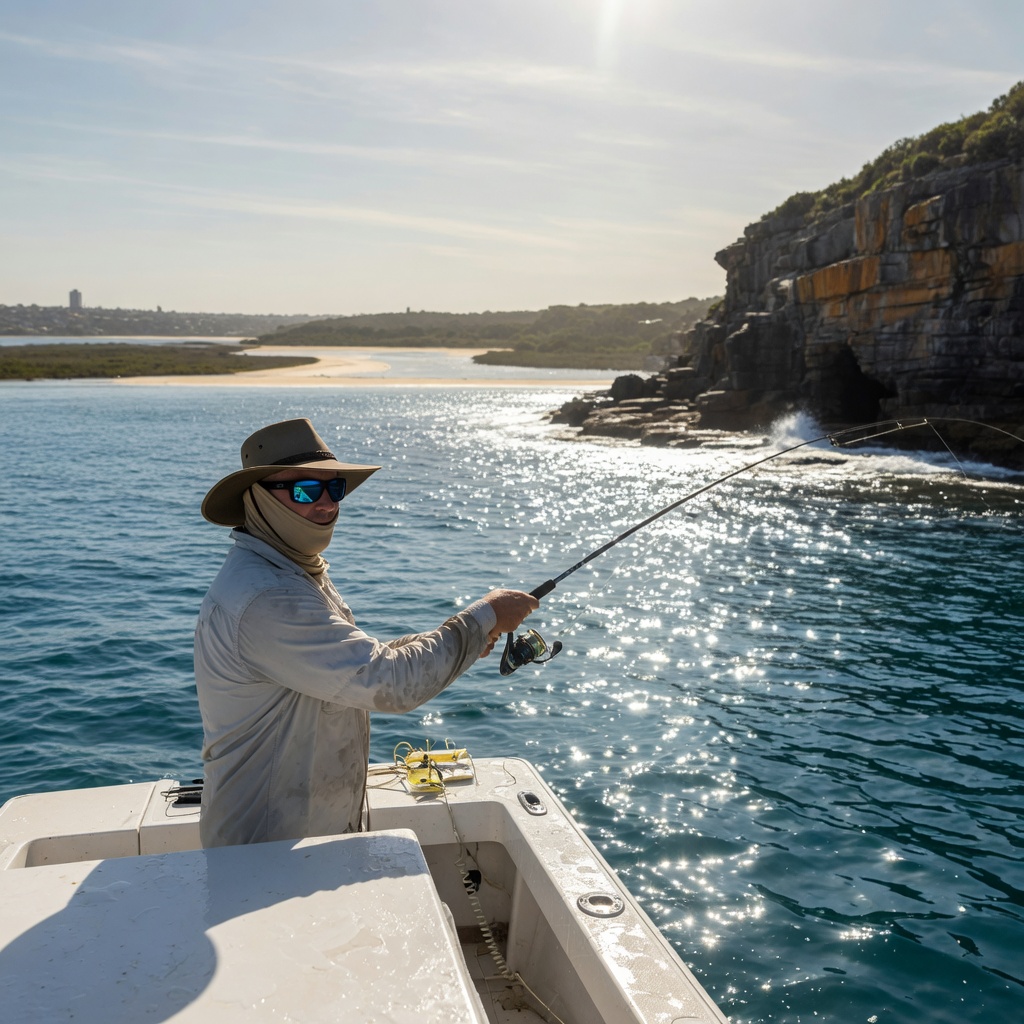
Why UV Matters More on the Water Than on Land
A ten-hour session out of a Sydney ramp feels very different to ten hours in the backyard. Water, wet decks and pale sand all reflect sunlight, so you copy UV from above and from below at the same time. Add the open horizon of offshore boat fishing, where there is no tree line or dune to throw shade, and the total exposure over a day climbs quickly. The UV index is simply a forecast number describing how strong that ultraviolet radiation will be at ground level, and it is one of the easiest planning inputs to read alongside tide, swell and wind on Tide Fishing.
In Sydney, UV readings peak in the middle of the day and are strongest through the warmer months, but a mild, breezy spring morning can still carry a high UV index. Cool air is not a UV forecast. Thin high cloud may drop the light level while letting plenty of UV through, which is why sessions that "felt overcast" can still leave you cooked by the afternoon run home.
How High UV Changes the Way You Fish
Long exposure does not only affect your skin. It changes decision quality. Glare off a flat, oily surface tires your eyes, makes it harder to read colour changes, bait schools and shallow reef edges, and slowly wears down concentration. That matters when you are working a drift over a mark, watching a sounder, or timing a cast at a rock ledge between sets.
- Fatigue creeps in. Heat and glare together shorten the window where you fish carefully rather than mechanically.
- Hydration drops off. Wind plus sun means you lose fluid without feeling especially hot, particularly at speed in a boat.
- Fish behaviour shifts. Under harsh overhead light, many estuary and inshore species sit tighter to structure, shade lines, deeper holes and undercut banks.
- Gear suffers too. Braid, leader spools, soft plastics and rod grips left on an open deck all age faster in strong sun.
Planning a Session Around the UV Curve
The simplest approach is to stack your best tide with the lowest UV part of the day. Around Sydney, that usually means early starts and a late-afternoon return, leaving the middle hours for the run between marks, a feed, or a shaded break.
- Check the tide first. Pick the run-out or run-in you actually want to fish.
- Overlay the UV forecast. Note the hours where the index is at its highest.
- Adjust the plan. If your prime tide falls in the peak UV block, build shade into the plan rather than abandoning the tide.
- Read wind and swell together. A light morning with a rising afternoon nor'-easter often gives a natural cut-off point for offshore work anyway.
- Set a turnaround time. Decide before you leave, not when you are tired.
Practical Habits for Beach, Rock and Offshore Sessions
Long-sleeved fishing shirts, a wide brim or legionnaire cap, polarised sunglasses and a buff are standard kit for a reason. Polarised lenses cut surface glare, which helps you spot structure and bait as well as reducing eye strain. On a boat, a bimini or canopy makes a genuine difference across a full day. On beach and rock sessions, plan where your shade will come from: a headland face, a cliff line, or simply a break back at the vehicle.
Other habits worth building: drink steadily rather than in big gulps, keep water out of direct sun, rotate who is on the wheel or the rod, and re-apply sun protection after every swim, wash-down or spray-soaking. If someone in the group is feeling washed out, that is a signal to shorten the session rather than push through.
Reading UV Alongside Other Conditions
UV is one line in a bigger picture. A clean 1m swell, light offshore breeze and a strong tidal push might look like the perfect day, and it often is — but a very high UV index tells you how to structure it. Conversely, a heavier cloud deck with light rain may lower UV while making the run out uncomfortable. Judge safety by swell, wind and forecast change; judge session length and comfort by heat and UV.
Quick Reference for Sydney Sessions
- Low UV window: the first and last couple of hours of daylight — ideal for extended casting sessions.
- Peak UV window: middle of the day — shorter, shaded, hydration-focused fishing.
- Cloudy days: still check the number; cloud is not a reliable UV shield.
- Multi-day trips: exposure accumulates, so ease back on day two and three.
Have a local question about matching tide, wind and UV for a particular Sydney mark? Get in touch with Tide Fishing at [email protected] or +61292658222 during Mon–Fri: 09:00 – 17:00 (AEST). This article is general fishing-planning information for conditions around Sydney and is not a substitute for the current official forecast or health advice.

Navigation
See also
FAQ