How to Launch a Boat Safely at Coastal Ramps
Why Ramp Planning Matters Around Sydney
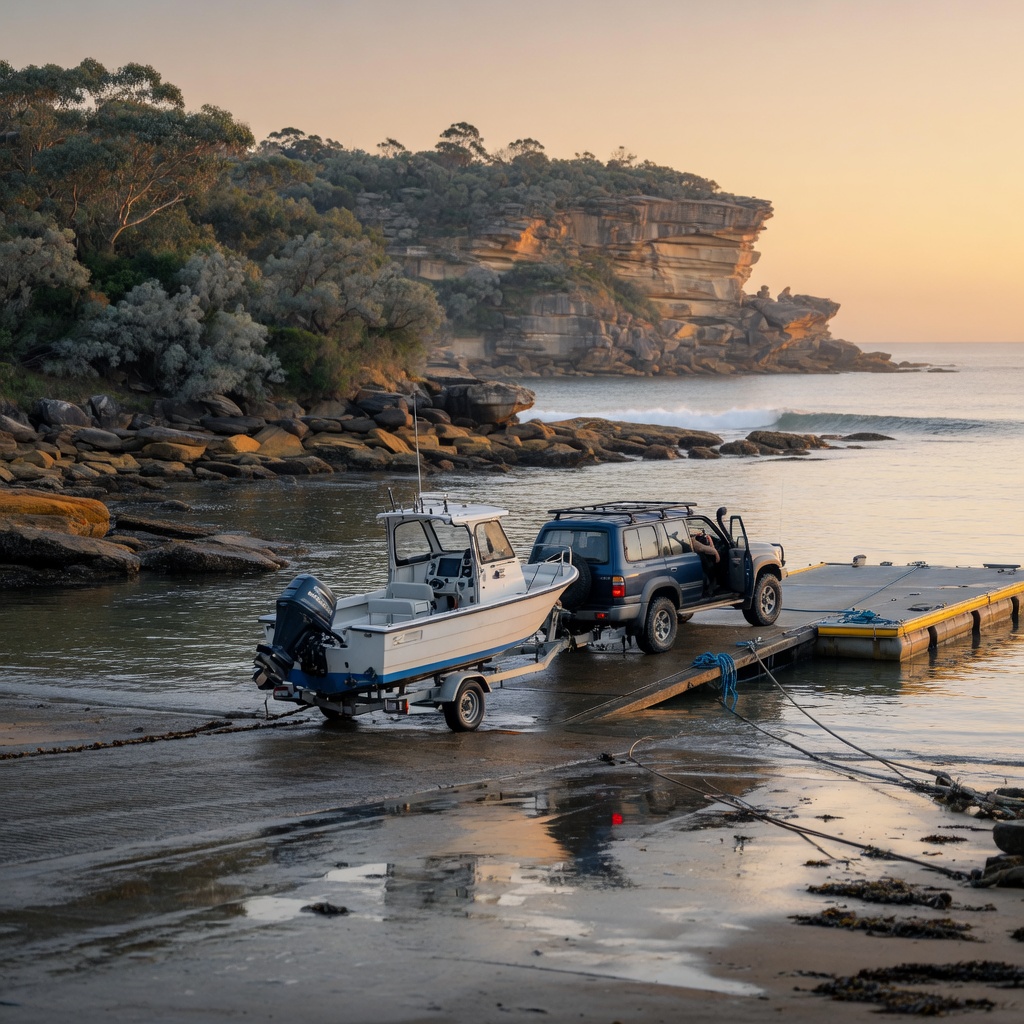
Most offshore fishing trips are won or lost before the motor even starts. Around Sydney, ramps sit in very different environments — sheltered estuary pontoons up the Hawkesbury and Georges River, mid-harbour ramps that feel wash from ferries and weekend traffic, and open coastal ramps that can take a direct hit from a southerly swell. The same trailer routine that works on a calm Tuesday morning can become genuinely risky on a Saturday with a two-metre south-easterly running and a spring low tide draining the ramp apron. At Tide Fishing we treat the launch as the first fishing decision of the day, not a chore to rush through.
Check the Tide Before You Hitch Up
Ramp depth is the first number to look at. Shallow, gently sloping ramps often run out of concrete near the bottom of a big low, which leaves your trailer wheels dropping off the end into soft sand or weed. On a low spring tide you may also find exposed rock shelves and sandbars in the channel between the ramp and open water.
- Read the tide chart for the closest station, not a generic city time — inside estuaries the tide can lag the ocean by an hour or more.
- Aim for a rising tide where possible, so if you do get stuck the water is coming to help you rather than leaving you high and dry.
- Note the return time. Plan retrieval around a workable tide height, especially if the ramp dries out.
- Watch the run-out. A strong ebb through a narrow entrance meeting an incoming swell creates standing waves at the bar — the classic reason to delay departure.
Swell, Wind and Moon Phase
For coastal ramps and bar crossings, swell height alone is misleading. Swell period tells you how much energy is in each wave: an eight-second, 1.5 metre wind swell behaves very differently from a fourteen-second groundswell of the same height. Long-period swell wraps into bays and refracts around headlands, so a ramp that looks protected on the map can still surge.
- Wind direction against tide stacks up short, steep chop; a fresh nor-easter over an outgoing tide is a common afternoon problem near Sydney.
- Offshore winds flatten the surface but can build all day and make the run home wet and slow.
- Moon phase drives tidal range. New and full moons bring bigger tides, faster currents and stronger flow at entrances — great for fish movement, less forgiving at the ramp.
A Step-by-Step Launch Routine
- Prep in the car park, not on the ramp. Remove tie-downs, fit the drain plug, load gear, connect fuel and battery, raise the leg, and attach the bow and stern lines.
- Test the motor before you reach the water where practical, and confirm you have fuel for the planned trip plus a reserve.
- Brief your crew. One person drives, one handles lines. Agree who does what before reversing.
- Reverse slowly and straight, using mirrors and small corrections. Stop before the wheel hubs go deep on an unfamiliar ramp.
- Float or push the boat off, then move it clear of the ramp to a pontoon or shoreline so the next boat can launch.
- Park the vehicle and trailer properly, and check your lights and safety gear are aboard: lifejackets worn, EPIRB, flares, V-sheet, bailer, anchor and radio.
Retrieval Without Drama
Coming home is usually the harder half. Crews are tired, the wind has often picked up, and ramps get busy. Idle in, hold off the ramp until a lane clears, and let the trailer be positioned before you approach. Winch the boat on with the trailer partly submerged, drive clear of the ramp, then do your tie-downs, plug removal and rinse in the wash-down area. Loading gear while parked on the ramp is the single most common cause of long queues and short tempers.
Small Habits That Prevent Big Problems
- Carry a spare wheel bearing kit, jack and wheel brace — salt water is hard on trailers.
- Wash trailer springs, brakes and lights after every trip.
- Keep a floating key ring and a second set of keys with another crew member.
- Wear a lifejacket while working on the ramp in surge or slippery conditions.
- Log a trip plan with someone ashore: ramp, destination, crew and expected return.
Ramp Etiquette
Coastal ramps are shared spaces used by anglers, divers, sailors and commercial operators. Keep your time on the ramp short, help someone struggling with a line if you can, don't block the wash-down bay, and take your bait bags, tangles and bottles home. Filleting rules and cleaning stations differ from ramp to ramp, so read the local signage each time.
Plan Your Trip With Tide Fishing
Use our tide charts, moon phase and swell notes to pick a window where the ramp, the bar and the fishing all line up. If you have questions about conditions at a particular Sydney ramp, contact us on +61292658222 or [email protected] during Mon–Fri: 09:00 – 17:00 (AEST). Conditions change quickly on this coast — always cross-check the latest official forecast and warnings before you leave, and be willing to cancel. The fish will still be there next tide.

Navigation
See also
FAQ