How to Fish Around Bridges and Pylons
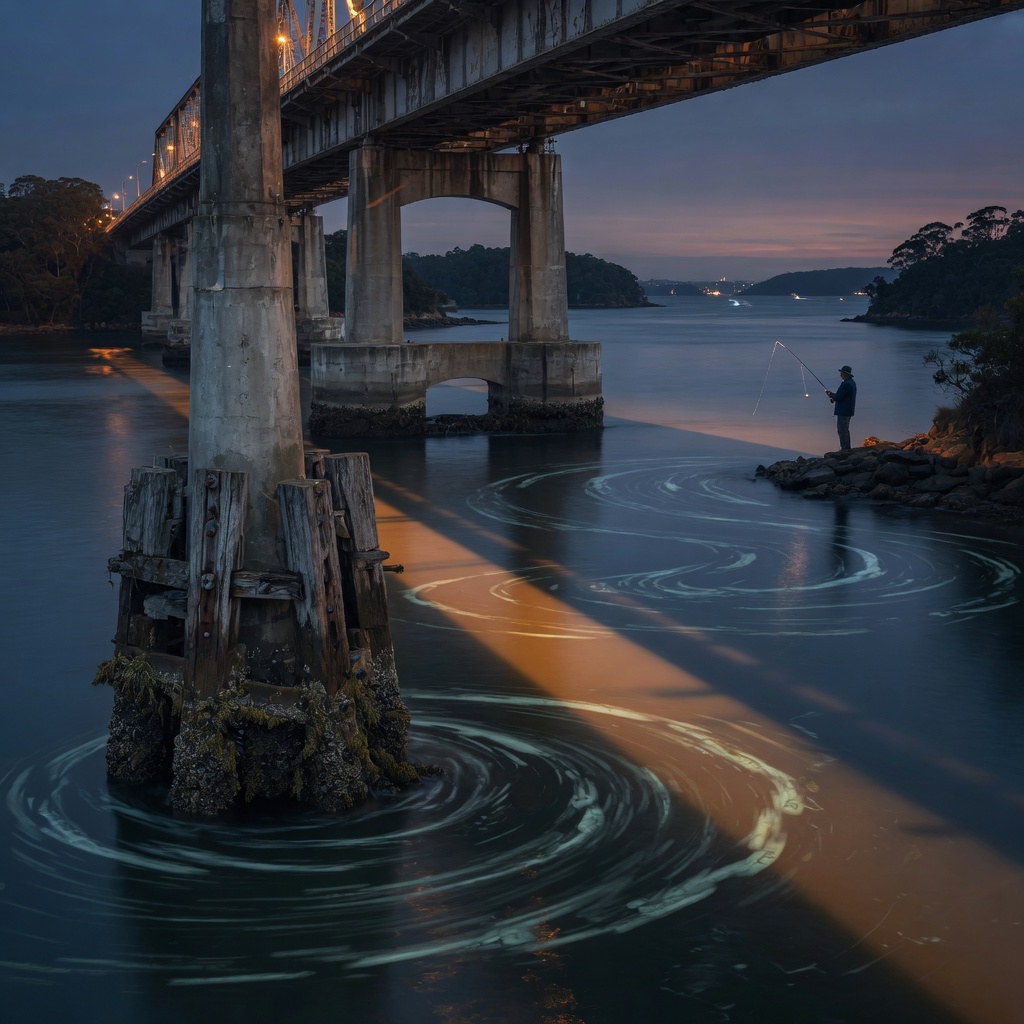
Why Bridges and Pylons Hold Fish
Bridges are one of the most reliable pieces of structure in any Sydney estuary. A bridge does three things at once: it squeezes tidal current into a narrow channel, it drops vertical timber, concrete or steel columns into the water column, and it casts a hard shadow line at night under street and navigation lighting. Each of those features attracts bait, and where bait gathers, predators follow.
Pylons themselves become artificial reefs. Barnacles, mussels, weed and cunjevoi colonise the surface, small crabs and prawns shelter in the growth, and baitfish circle the column out of the main flow. Bream, luderick, trevally, tailor, flathead on the adjacent sand, mulloway in the deeper holes and squid around the weedy verges all use bridge structure at some point in the tide. On Tide Fishing we treat bridges as tide-driven fisheries first and locations second — the same pylon can be dead at slack water and alive an hour later.
Reading the Tide at a Bridge
Current is the engine. As the tide pushes through a bridge span, the water accelerates and forms a pressure wave on the upstream face of each pylon and a slack eddy on the downstream side. Fish sit in that eddy, facing into the flow, and dart out to grab food swept past.
- Run-out tide: often the pick in estuaries, as prawns, worms and small crabs are flushed out of mangroves and flats towards the bridge.
- Run-in tide: brings cleaner ocean water and can switch on trevally, tailor and squid, especially in the lower reaches closer to the harbour mouth.
- Last two hours of a tide: flow is still moving but manageable — usually the easiest window to hold bottom or keep a lure in the strike zone.
- Slack water: generally the quietest period. Use it to move, re-rig or scout the next pylon.
Cross-check the tide chart with the moon phase. Around new and full moon the tidal range is larger, so current through a bridge span runs harder and for longer — great for bait movement, harder for light tackle. Neap tides around the quarter moons give gentler flow that suits finesse presentations and shallow spans.
Wind, Swell and Water Clarity
Bridges are usually sheltered compared with open beach or rock platforms, which makes them a smart option when the swell forecast is ugly. A big south-easterly swell that closes out ocean rocks often has little effect inside an estuary, though it can push dirty water into the lower reaches for a day or two.
Wind matters mostly for boat control and casting accuracy. A breeze blowing against the tide creates a short, choppy standing wave through the span and makes it difficult to hold position or feel a bite. Wind with the tide flattens the surface but speeds drift. Where possible, plan a session where wind and tide are roughly aligned but light — under about 15 knots is comfortable for most small-boat and land-based work.
Tackle, Rigs and Presentation
Structure fishing is a compromise between finesse and stopping power. Around barnacle-covered pylons, abrasion is the main cause of lost fish.
- Leader: run a longer, heavier fluorocarbon leader than you would on open flats. Check the last metre for nicks after every fish or snag.
- Weight: use only enough lead to reach the strike zone. Too heavy and the bait pins to the bottom; too light and the current sweeps it out of the eddy.
- Lures: soft plastics on jig heads worked down the face of a pylon, vibes hopped along the base, and small hard bodies cast up-current and swum back with the flow all work. Let the tide do the swimming.
- Baits: peeled prawn, half pilchard, live poddy mullet, strip baits and yabbies are all proven around estuary bridges. Match the bait to what the current is naturally delivering.
- Angle of attack: cast up-current, not straight at the pylon. Let the offering swing naturally into the eddy behind the column — that is where most bites happen.
Night Sessions and the Light Line
Lit bridges create a distinct edge between bright water and darkness. Baitfish and prawns hold in the lit water; predators sit in the shadow and ambush anything that strays. Work your lure or bait from the dark side into the light, or hold it right on the seam. Mulloway in particular favour the deeper, darker side of a span on a moving tide, often on the change from run-out to slack.
Take a headlamp with a red setting, keep white light off the water, and move quietly — timber decks and steel rails carry noise straight down into the water.
Safety, Access and Etiquette
Never fish from a road bridge carriageway or climb on structure. Use designated walkways, boardwalks, wharves and public platforms only, and obey posted signage — some spans, navigation channels and rail structures are closed to fishing or to vessels. Keep clear of moving boat traffic in narrow channels, and if you are fishing from a boat, anchor or use spot-lock well outside the marked channel and show the correct lights at night.
Check the current NSW fishing rules for size and bag limits before you keep anything, and note any closures that apply to your chosen waterway. Retrieve snagged line and jig heads where you safely can — braid wrapped around a pylon is a hazard for wildlife and other anglers.
Build a Simple Session Plan
Pick one bridge and learn it properly instead of chasing five spots in a night. Note the tide stage, moon phase, wind direction, water clarity and which pylon produced. After a handful of sessions you will see a pattern — usually a specific tide window on a specific side of the span.
For local tide charts, moon phases and swell and wind outlooks for Sydney, browse the rest of Tide Fishing. Questions or a spot report to share? Reach us on +61292658222 or [email protected] during Mon–Fri: 09:00 – 17:00 (AEST).

Navigation
See also
FAQ