How to Catch Live Bait Along the Coast
Why Live Bait Changes Your Session
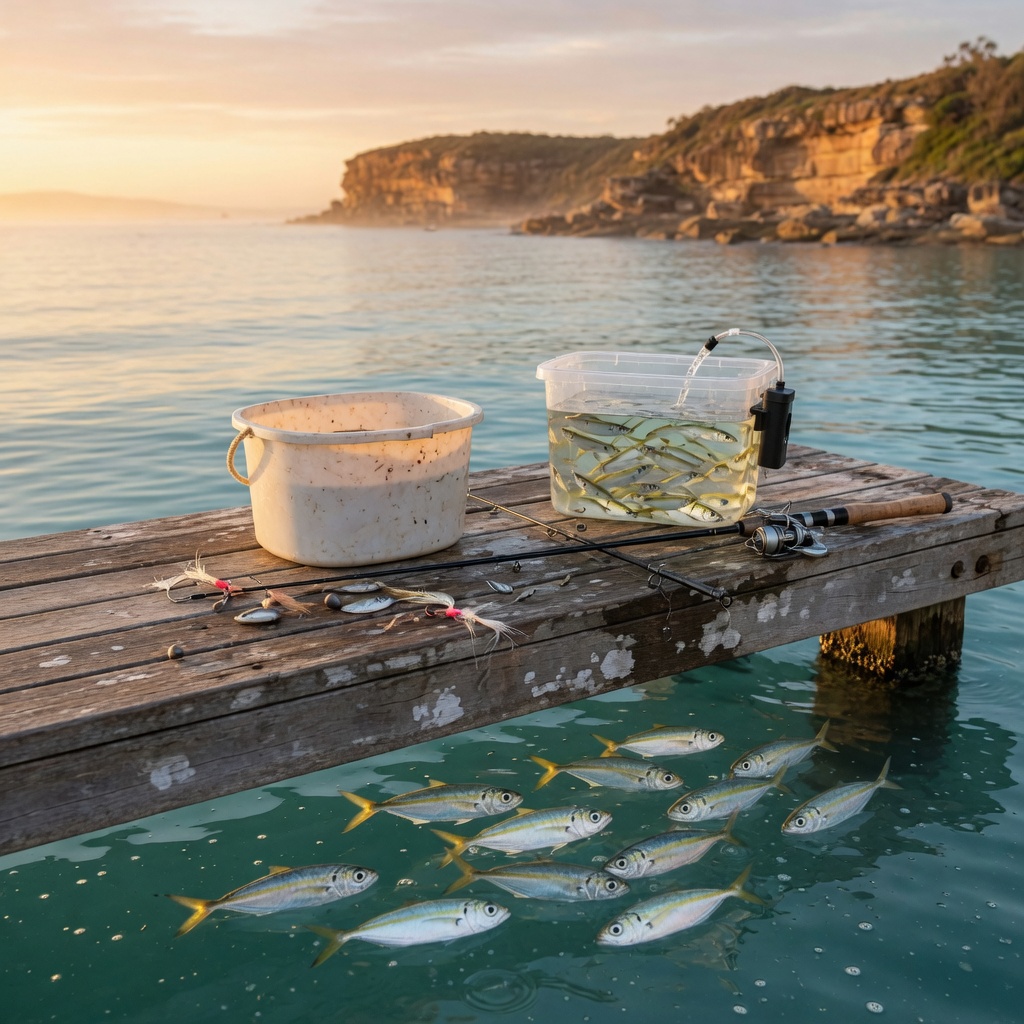
Most offshore and rock sessions around Sydney are won or lost in the first hour, and that hour is usually spent collecting live bait. A frisky yellowtail scad swimming under a balloon will out-fish a frozen pilchard nearly every time, because it moves, flashes and sends out distress vibrations that kingfish, mulloway and pelagics home in on. The good news is that you rarely need to travel far — the bait is often holding on the same headlands, wharves and estuary flats you already fish.
Before you leave home, check the tide chart, wind forecast and swell height for your stretch of coast. Bait gathering is a shallow-water job, so a 2-metre south-easterly swell will ruin a headland plan even when the wind looks light. If conditions are marginal, switch to a sheltered estuary option rather than cancelling the day.
The Bait Species Worth Chasing
- Yellowtail scad (yakkas) — the everyday staple. Found around moored boats, wharf pylons, kelp edges and rocky drop-offs in 3–15 metres.
- Slimy mackerel — cooler months, usually a little further out along the coastal reef lines and off the headlands. Fragile, so handle them wet-handed.
- Pilchards and whitebait — schooled tight in bays, best taken with a fine bait jig or small cast net where permitted.
- Poddy mullet — brilliant estuary live bait for flathead and jewfish, trapped in shallow sandy corners on a rising tide.
- Squid — technically not a fish, but a live squid over the reef is arguably the best bait on the coast. Look for weed beds in 2–6 metres at first light.
Gear That Actually Works
Keep it simple. A light 6–7 foot rod with 10–15 lb line and a small threadline reel handles bait jigs, hand-tied gangs of tiny hooks, and squid jigs. Carry:
- Two or three bait jigs in different sizes — fine gold hooks for pilchards, larger red-tube jigs for yakkas and slimies.
- A small sinker to get the jig down through the school, plus a spare in case of reef snags.
- A berley mix of bread, chook pellets and tuna oil in a mesh bag or pot. Berley is the single biggest difference between five baits and fifty.
- A bait tank or aerated bucket. Live bait dies from heat and ammonia, not from lack of water — change the water often and keep numbers sensible.
Reading the Tide, Wind and Moon
Bait schools sit where current concentrates food. Around headlands and wharves, the last two hours of the run-out and the first two of the run-in generally produce the tightest, most aggressive schools. Slack water can scatter them, though it makes squidding easier because your jig sinks naturally over the weed.
Light offshore breezes — typically a pre-dawn westerly in Sydney — flatten the surface, keep berley trails intact and let you see schools boiling near the top. Fresh nor'-easters push surface water out and often drive bait deeper. On big spring tides near the new and full moon, expect faster current, deeper schools and a shorter feeding window; smaller neap tides around the quarter moons are gentler and better for beginners.
Time of Day
First light and the last hour before dark are prime. Yakkas and slimies feed hardest in low light, and squid move up onto shallow weed after sunset. If you can only fish the middle of the day, work deeper structure and use heavier berley.
Keeping Bait Alive and Rigging It
Handle every bait with wet hands or a soft, knotless net. For casting distance, bridle or pin the hook through the nose or shoulder; for slow-trolling and drifting, hook just behind the anal fin so the bait swims away from you. Match hook size to bait size — an oversized hook drowns a small yakka within minutes.
Fish smaller livies on lighter leaders in clear water, and swap to heavier leader when working close to reef or rock ledges. If a bait stops swimming, replace it; a limp live bait is just an expensive dead one.
Rules, Safety and Common Sense
Always check current bag and size limits, closed areas and net restrictions with the relevant state fisheries authority before collecting bait — regulations differ between estuaries and marine park zones. On the rocks, wear cleated boots and a lifejacket, watch the sets for at least ten minutes before committing, and never turn your back on the water.
Want a hand planning a bait session around the next set of tides? Get in touch with Tide Fishing on +61292658222 or [email protected] during Mon–Fri: 09:00 – 17:00 (AEST), and tell us which stretch of coast you're fishing.

Navigation
See also
FAQ