Fishing Oyster Leases Safely and Effectively
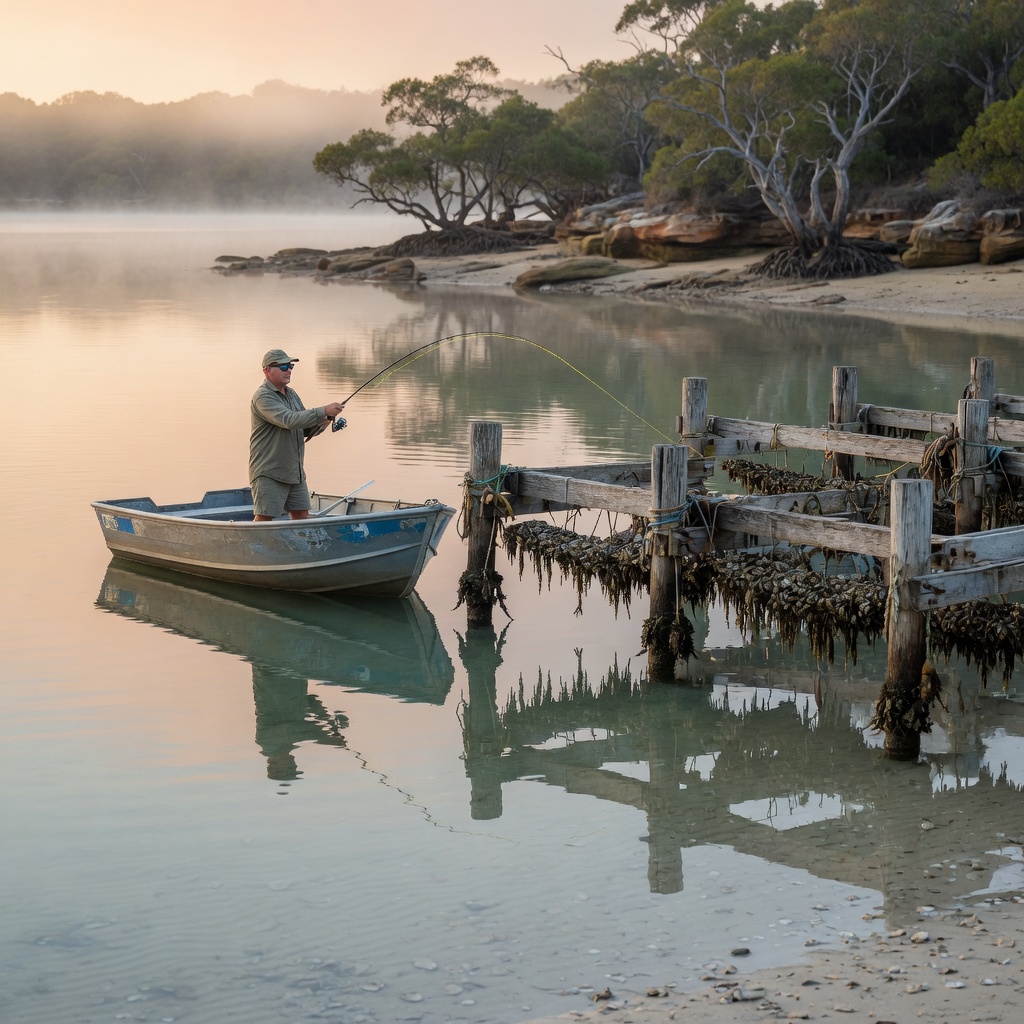
Why Oyster Leases Hold Fish
Oyster leases are one of the most productive pieces of structure in New South Wales estuaries. The racks, posts and rope lines grow a thick coating of oysters, mussels, weed and barnacles, and that coating becomes a food factory. Crabs, prawns, small baitfish and worms all live in the shade underneath. Bream, luderick, tarwhine, flathead, trevally and the occasional big mulloway patrol the edges, moving in as the tide floods and dropping back to deeper channels as the water falls away.
Around Sydney and the wider Hawkesbury, Georges River, Port Hacking and Central Coast systems, leases sit on shallow sand and mud flats, often in less than a metre of water at the bottom of the tide. That shallow setting is exactly why tide planning matters more here than almost anywhere else you fish. Get the timing right and you are casting into a feeding zone. Get it wrong and you are looking at exposed racks and a long push back to deeper water.
Reading the Tide Around Racks
Use a tide chart for the nearest station and then adjust for how far upstream you plan to fish — upper reaches commonly run thirty to sixty minutes behind the ocean entrance. As a general approach:
- Last two hours of the flood: fish move up onto and into the racks. Cast tight, expect fast bites.
- High slack: the quietest period. Good time to reposition or work the deeper channel edges nearby.
- First three hours of the ebb: often the best window. Fish sit at the down-current end of the lease waiting for food to wash off.
- Low tide: target drains, gutters and the deeper holes at the end of the racks rather than the racks themselves.
Bigger spring tides around the new and full moon push more water and more bait, but they also drop further and faster. On neap tides the flow is gentler, which suits light lines and surface lures. Wind matters too: a breeze pushing across a flat lease creates a slight chop that reduces how spooky the fish are, while glass-calm conditions usually mean longer casts and lighter leaders.
Approaching Safely by Boat
Racks are hard, sharp and mostly hidden. Treat every lease as a hazard first and a fishing spot second.
- Approach on the plane only in marked channels, then idle well before you reach the outer posts.
- Trim the motor up and use an electric or a push pole in the shallows. Note where the posts sit while the tide is low so you know the layout when it is covered.
- Anchor or spot-lock up-current of the lease and cast back with the flow, rather than drifting into it.
- Never tie your boat to lease posts or ropes. They are working infrastructure and they are not designed to hold a hull.
- Watch your own draft against the falling tide. A boat sitting comfortably at half tide can be stranded within the hour.
- Wear a lifejacket in the shallows and carry the safety gear required for the waters you are on.
Many leases are active commercial farms. Give workers room, stay clear of punts and infrastructure, and keep off any area signposted as closed. If in doubt, fish the outer edge and the surrounding flats — they often produce just as well.
Rigs and Tackle That Survive Oyster Shell
Oyster growth cuts line quickly, so leader choice is everything. A 2–4 kg braid main line with a metre of abrasion-resistant fluorocarbon leader around 8–12 lb suits most bream and tarwhine work. Step up to 20–30 lb leader if you are targeting mulloway or fishing hard against posts where you must stop a fish immediately.
- Unweighted or lightly weighted baits: a small ball sinker running to the hook lets a peeled prawn, half pilchard or live nipper drift naturally under the racks.
- Soft plastics: 2–3 inch prawn or paddle-tail profiles on light jigheads, hopped along the sand between rows.
- Surface lures: outstanding on warm mornings and evenings over shallow racks, with the bonus that they snag far less than diving lures.
- Small crab-pattern lures and vibes: effective on the deeper down-tide edge as the water drains.
Keep drag firm enough to turn a fish away from structure, and re-check your leader after every hook-up. If it feels furry, cut it back and retie.
Local Planning Checklist
Before you leave, cross-check the tide height and time, the moon phase, the forecast wind direction and any swell that could affect your run out through an entrance. Fishing an ebb tide into a fresh sou'-easter can turn a simple trip into an uncomfortable one. Note bag limits, size limits and closed seasons for your target species, and release oversized breeders carefully — big bream that live in the racks are old fish.
Tide Fishing publishes tide, moon and weather guidance for estuary, beach and rock anglers across Sydney and the surrounding coast. If you have a question about timing a session on a particular system, contact us on +61292658222 or at [email protected] during Mon–Fri: 09:00 – 17:00 (AEST), and we will point you to the right tide window and conditions to watch. For anglers stepping further out, see our notes on offshore boat fishing and how the same tide and swell principles apply beyond the heads.

Navigation
See also
FAQ