Fishing During Full Sun vs. Overcast Conditions
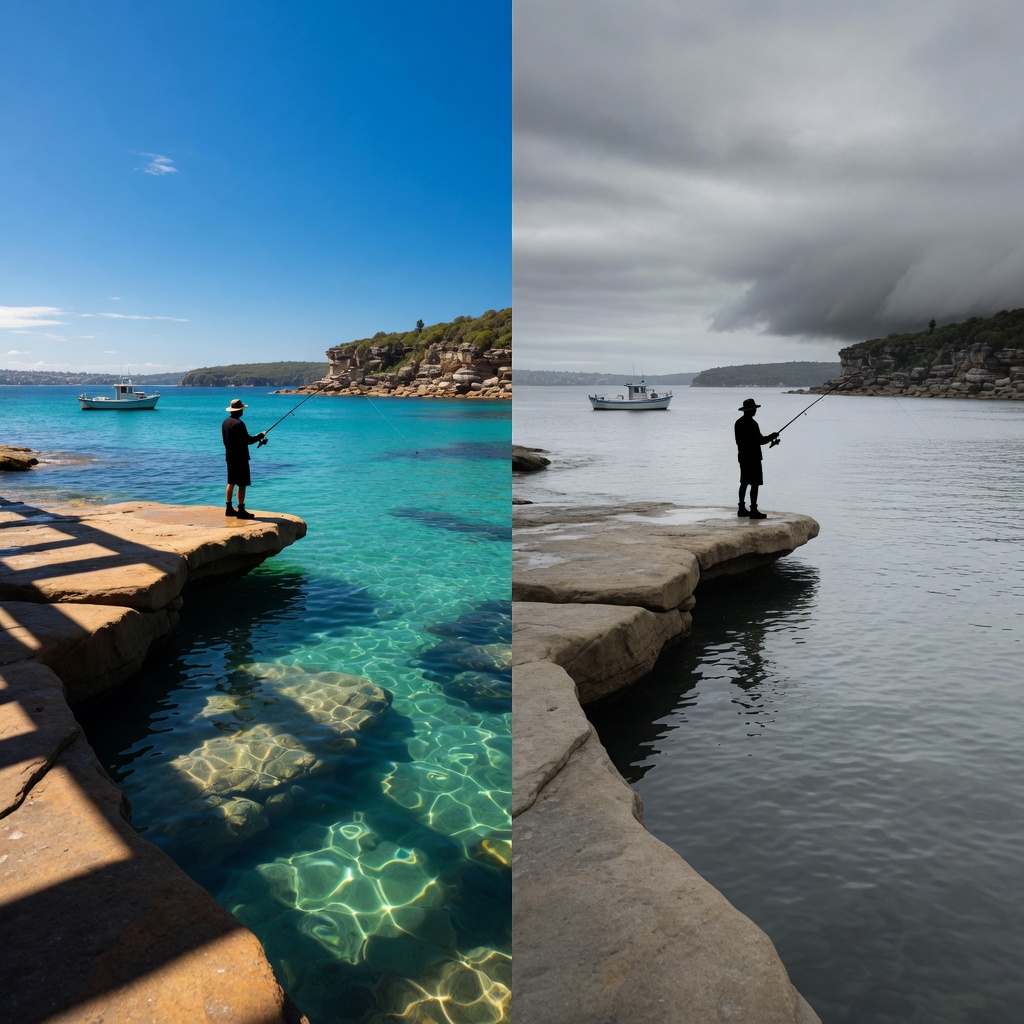
Why Cloud Cover Matters as Much as the Tide
Most anglers around Sydney plan a session around the tide chart and the swell forecast, then treat the sky as an afterthought. In practice, light is one of the strongest triggers on the water. Cloud cover changes how far light penetrates, where bait sits in the water column and how confident predators feel about leaving structure. A run-out tide under heavy grey cloud can fish completely differently to the same tide under a hard blue sky, even with identical wind and swell.
Think of light as a third variable alongside tide and wind. On Tide Fishing we encourage you to note the sky conditions in your fishing log next to the tide times and moon phase, because patterns emerge quickly once you have a dozen sessions recorded.
What Happens Under Full Sun
Bright, high sun pushes fish deeper, tighter to shade and harder against structure. On Sydney's rock ledges and estuary flats this usually means:
- Shade becomes the target. Work the shadow lines under wharves, moored boats, overhanging mangroves, bommies and ledge undercuts rather than open water.
- Fish get spooky. Water clarity is at its highest, so longer leaders, lighter fluorocarbon and a quieter approach pay off.
- Depth wins. Deeper holes, channel edges and drop-offs hold fish through the middle of the day.
- Timing shrinks. The best windows compress into early morning, late afternoon and any tide change that lands near dawn or dusk.
Full sun is not a write-off. Bright conditions are excellent for sight fishing flats, spotting bait schools, reading colour changes offshore and finding surface activity from a long way off. Polarised sunglasses turn a glary day into a genuine advantage.
What Happens Under Overcast Skies
Grey, even light spreads fish out and stretches the bite window. Predators that would normally hold under structure will roam, and sessions can stay productive well into the middle of the day.
- Fish sit shallower and hunt harder, especially bream, flathead, tailor and salmon along beaches and estuary edges.
- Surface and shallow presentations improve. Poppers, walk-the-dog lures and unweighted soft plastics get more attention.
- Colour choice shifts. Darker, high-contrast or bright profiles show up better in flat, low-contrast light.
- You can fish the whole tide. A midday tide change under cloud is far more useful than the same change under glare.
The trade-off is visibility. Reading bommies, sand banks and shallow reef is much harder without sun, and that matters for both rock and boat safety.
Offshore Boat Fishing: Light, Sea State and Safety
Offshore out of Sydney, sky conditions interact with swell and wind in ways that affect both the fishing and the run home. Under full sun, expect bait to hold deeper over reef and pinnacles, so drop deeper, slow your jigging cadence and fish the shaded side of structure on the drift. Under overcast skies, pelagics such as bonito and kingfish will often work bait closer to the surface, making trolling and casting to surface commotion more effective.
Practical offshore points:
- Check swell period as well as swell height — a long-period swell of the same height feels very different crossing a bar or working a headland.
- Overcast days flatten your ability to see reef and shallow ground, so rely on your sounder and known marks rather than eyesight.
- Wind against tide creates a short, sharp chop offshore. Plan drifts so wind and current work together where possible.
- Grey skies can hide building weather. Note wind change timing in the forecast and set a firm turnaround time before you leave the ramp.
Matching Sky Conditions to Tide and Moon
The strongest sessions stack conditions. A tide change that coincides with low light — dawn, dusk, or a heavily overcast day — is generally more productive than a tide change under harsh midday sun. Around the new and full moon, stronger tidal flow adds another trigger, and cloud cover on those days can extend the bite considerably.
A simple planning order that works well for Sydney anglers:
- Find the tide changes for the day on your tide chart.
- Check which of those fall in low-light periods or under forecast cloud.
- Confirm wind direction and swell suit your chosen spot — especially for rock platforms.
- Pick your lure colour, leader and depth based on the expected light, not habit.
Gear and Presentation Adjustments
Under bright sun, lean towards natural colours, translucent plastics, lighter leaders and smaller profiles worked slowly and deeper. Under overcast conditions, step up to bolder colours, larger profiles and faster, more aggressive retrieves to trigger reaction strikes in reduced visibility. Bait anglers can apply the same logic: fresh, well-presented baits fished deep and close to structure in glare, and more actively drifted or lightly weighted baits under cloud.
Fish Safe, Whatever the Sky
Rock fishing around Sydney demands respect in any light. Wear a lifejacket, never turn your back on the water, and check swell forecasts before committing to a ledge. Overcast conditions can mask the size of an approaching set, so give yourself more margin, not less.
Questions about reading conditions for a particular Sydney spot? Get in touch with Tide Fishing on +61292658222 or [email protected] during Mon–Fri: 09:00 – 17:00 (AEST), and browse our tide, swell and moon phase guides for Sydney before your next session.

Navigation
See also
FAQ