Fishing Around Seagrass Beds
Why Seagrass Holds Fish
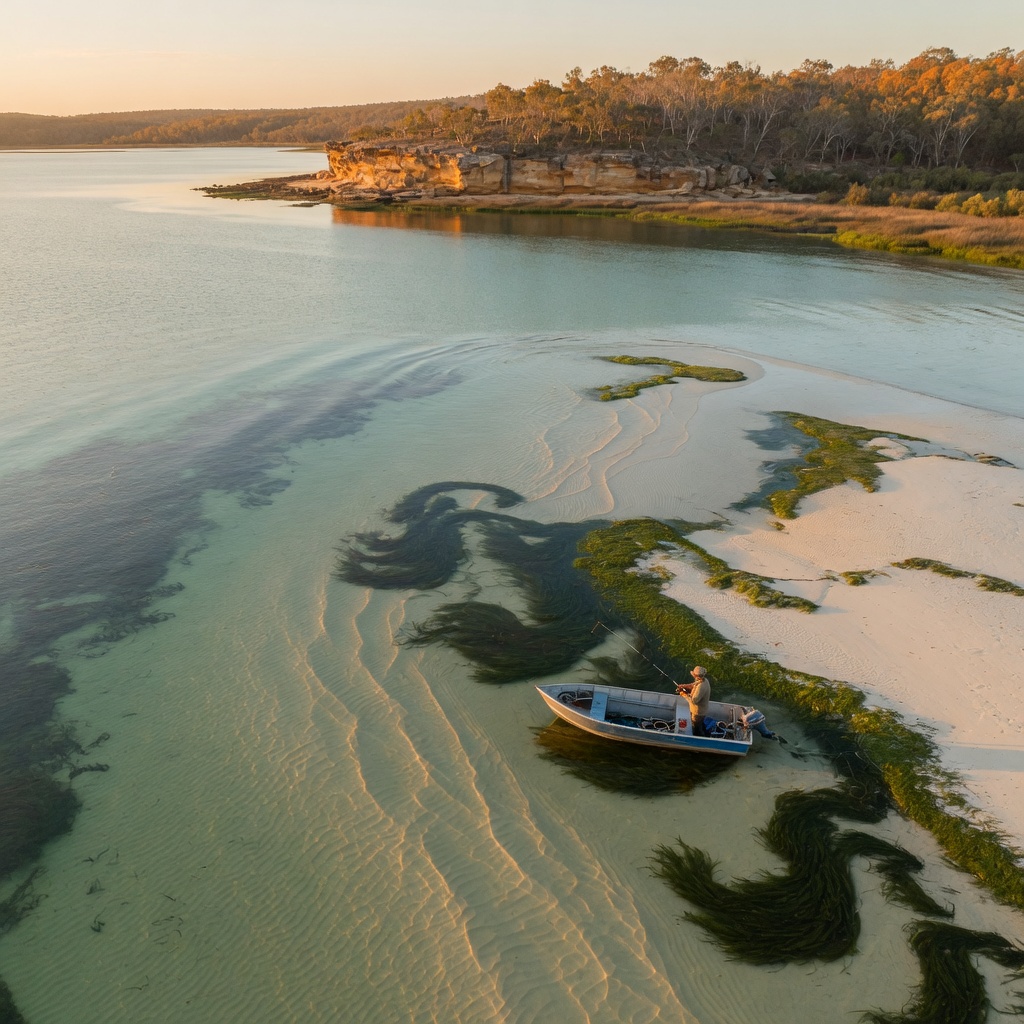
Seagrass meadows are the nurseries of Sydney's estuaries. The broad blades of strapweed and the finer eelgrass trap drifting food, shelter prawns, small crabs and juvenile baitfish, and hold cooler, oxygen-rich water on hot afternoons. Where seagrass meets clean sand, you get an edge — and edges are where predators hunt. Whiting, bream, flathead, luderick, tarwhine and squid all use these zones, moving up onto the flats as the water rises and dropping back into the deeper channels as it falls.
On Tide Fishing we treat seagrass as a tide-driven fishery rather than a fixed spot. The grass does not move; the water over it does. Learn the depth of the bed at low tide and you can predict, almost to the hour, when fish will be feeding on top of it.
Reading the Tide Over the Flats
Most Sydney seagrass beds sit in roughly half a metre to two metres of water. That shallow profile makes tide height the single most important variable.
- Last two hours of the flood: the best window for whiting and bream working the blades for nippers and worms.
- Top of the tide: fish spread wide and can become hard to locate — target the deeper potholes inside the meadow.
- First three hours of the ebb: often the peak bite, as food is flushed off the flat toward the drop-off. Position on the down-current side of the bed.
- Bottom of the tide: concentrate on channel edges, weed lines and any gutter running through the grass.
Bigger tides around the new and full moon move more water and stir more food, but they also cloud the shallows. Neap tides suit sight fishing and light lures because clarity holds. Check the tide chart the night before and pick your arrival time, not just your spot.
Wind, Swell and Water Clarity
Seagrass fishing is mostly protected from ocean swell, which makes it a reliable fallback when the beaches and rock ledges are unfishable. A north-easter of 15 to 20 knots on a Sydney summer afternoon will chop up open flats but leave the western banks fishable. A fresh southerly change usually kills the bite for a few hours, then improves once the water settles.
Watch clarity closely. After heavy rain, run-off drops salinity and stains the estuary; fish often shift downstream toward the entrance where cleaner ocean water pushes in on the flood. A light ripple on the surface is ideal — it hides your leader and your shadow without making the bed impossible to read.
Tackle and Presentation
Light gear wins here. A 2–4 kg rod of around seven feet, a 2500-size reel, light braid and a fluorocarbon leader covers most work. Because the grass sits high off the bottom, presentation matters more than weight.
- Bait: use the lightest running sinker that still holds, or fish unweighted on the drift so the bait rides above the blades.
- Soft plastics: switch to weedless-rigged worms or paddle-tails, or work small jig heads with a lift-and-glide retrieve over the canopy.
- Surface lures: hard to beat for whiting on a rising tide over shallow grass in the early morning.
- Squid jigs: cast along the outer edge of the bed and let the jig sink to the top of the weed before a slow whip retrieve.
Retie your leader often. Seagrass, shell grit and oyster-covered rubble all scuff line quickly.
Fishing Seagrass from a Boat
Approach quietly. Shut the outboard well before the edge and drift, pole or use an electric motor. Anchor on sand or mud beside the bed rather than in it, and never drag chain across the meadow — seagrass recovers slowly and damaged beds hold fewer fish for years. Drifting with the tide across the outer margin, casting ahead of the boat, covers more ground than sitting still.
In shallow water, sound and shadow travel a long way. Avoid banging hatches, keep tackle boxes off the deck and stay low when the sun is behind you.
Look After the Ground You Fish
Seagrass beds in New South Wales are important habitat and are protected in many areas. Before you fish, check the current rules for bag limits, closures and aquatic reserves with the relevant state fisheries authority, and take all line, bait bags and jig packets home. Handle undersized fish in the water, wet your hands, and release quickly.
Plan Your Session
Combine the tide chart, the moon phase and the wind forecast for Sydney before you commit. If the tide tops out at dawn on a light offshore breeze, take the surface lures to the flats. If it bottoms out in the middle of the day with a stiff sea breeze, work the channel edges with bait instead.
Questions about conditions or a particular estuary? Get in touch with Tide Fishing on +61292658222 or at [email protected]. We reply during Mon–Fri: 09:00 – 17:00 (AEST).

Navigation
See also
FAQ