Fishing Around Jetties and Piers
Why Jetties and Piers Fish So Well
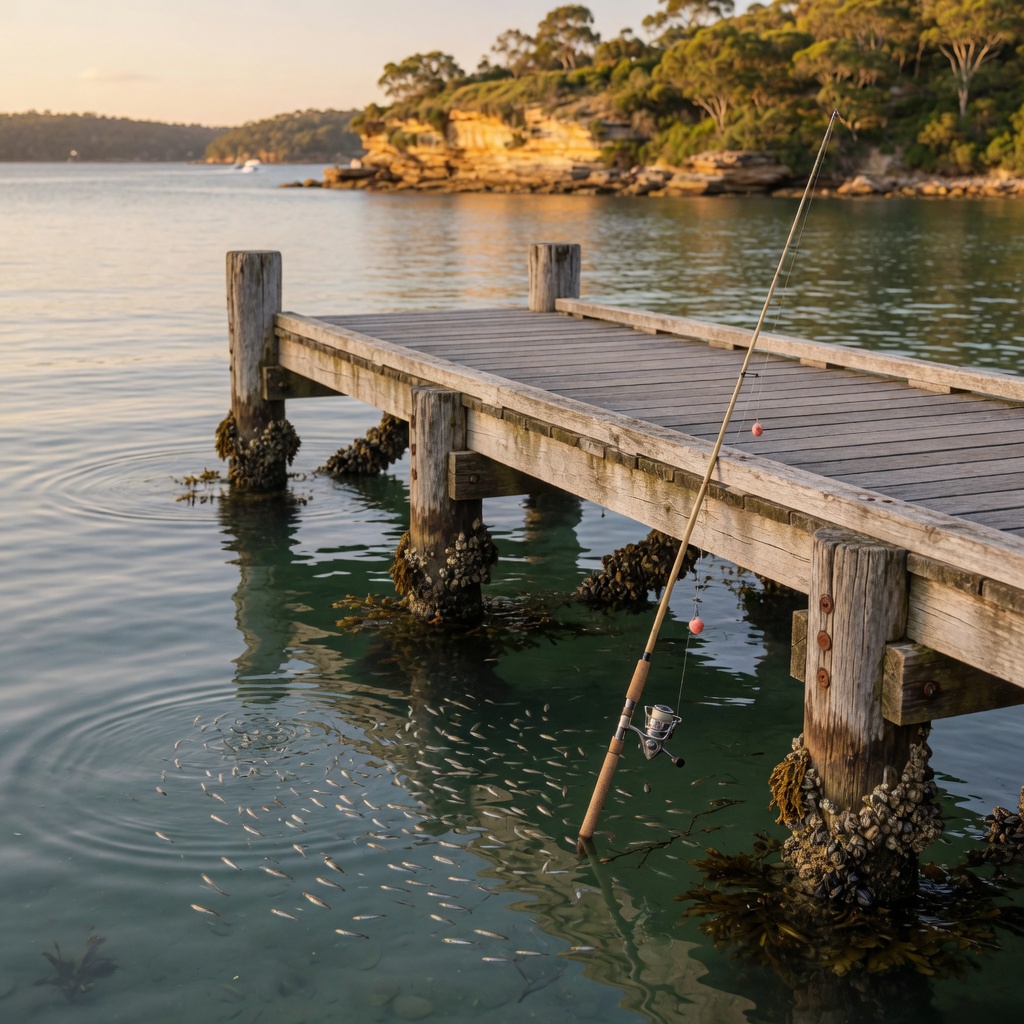
Jetties, piers and old wharves are some of the most productive structures around Sydney because they do three things at once: they create shade, they slow the current, and they grow food. Pylons collect weed, mussels, barnacles and cunjevoi, which hold prawns, crabs and small baitfish. Predators sit in the shadow line and pick off anything the tide pushes past. That means you rarely need to cast far — most of the action happens within a few metres of the timber or concrete.
On Sydney Harbour and the Parramatta River, public wharves and pontoons give shore-based anglers access to deep water that would otherwise need a boat. Estuary jetties in Pittwater, Botany Bay and the Georges River offer the same advantage in calmer conditions, which makes them a good option when the swell shuts down the rock ledges.
Reading the Tide Around Structure
Tide is the single biggest variable. Around pylons, moving water is what triggers a bite, so plan your session around a run rather than a clock time. Practical guidelines:
- Last two hours of the flood — clean water pushes in over the flats and bait moves up onto the structure. Good for bream, whiting and trevally.
- First two hours of the ebb — prawns, crabs and small fish get flushed off the weed and past the pylons. Often the most reliable window.
- Slack water — usually slow. Use it to rig up, move spots or work vertical jigs slowly down the pylon face.
- Spring tides around the new and full moon create stronger current; you may need heavier sinkers or a spot with more shelter.
Overlay this with light. Dawn, dusk and the first hours of dark are prime, especially where wharf lights spill onto the water and draw baitfish into a tight ball. A running tide plus a light line at night is a classic Sydney combination for squid, tailor and big bream.
Wind, Swell and Comfort
Enclosed jetties are far less swell-dependent than rock platforms, but wind still matters. A light westerly in the morning flattens harbour chop and makes bite detection much easier on light line. Strong nor'easters through summer afternoons stack up wind chop and drifting weed, so shift to a sheltered western side of a bay. Ocean-facing piers and breakwalls should be treated more like rock fishing: check the swell forecast, watch for wash over the walkway, and stay off exposed sections when the sea is building.
Rigs and Techniques That Work
Tight to the Pylons
Use a light running sinker or an unweighted bait and let it drift naturally down the pylon face. Bream, luderick and estuary snapper often sit within a metre of the growth. Braid with a fluorocarbon leader of around 8–12 lb gives you feel and abrasion resistance against barnacles.
Along the Shadow Line
Cast soft plastics, small vibes or metal slugs parallel to the structure and retrieve along the edge where light meets dark. Predators face into the current, so cast up-current and let the lure swing back naturally.
Under Wharf Lights
Squid jigs worked slowly, or a small live bait under a float, are hard to beat. Keep noise and torch beams off the water to avoid spooking fish that have come in close.
Common Species Around Sydney Jetties
- Bream — year-round, best on a moving tide with light leader.
- Yellowtail and slimy mackerel — bait schools that also make excellent live bait.
- Tailor and salmon — chase the bait balls at dawn and dusk.
- Squid — around weedy pontoons and lit wharves at night.
- Trevally, flathead and whiting — on sand and rubble edges close to the structure.
Etiquette, Access and Safety
Many jetties are shared with boat traffic, ferries, swimmers and pedestrians. Keep gear clear of walkways, avoid casting across other lines, and never fish from a ferry wharf while a vessel is berthing. Check local signage — some pontoons and marinas restrict fishing entirely. Use a landing net or drop net rather than lifting fish on the line, wear grippy footwear on wet timber, and know where the nearest ladder or safety ring is before dark. Take all line, bait bags and hooks home; discarded tackle around pylons is a real hazard for birds and marine life.
Planning Your Next Session
Before you head out, check the tide chart, moon phase and wind forecast together, then pick the jetty that offers shelter from the prevailing breeze on that day. Keep a simple log of tide stage, moon and results — after a handful of trips you will see clear patterns for your local structure. For tide tables, swell and moon phase information for Sydney, browse the rest of Tide Fishing, or get in touch on +61292658222 or [email protected] during Mon–Fri: 09:00 – 17:00 (AEST).

Navigation
See also
FAQ