Fishing Around Artificial Reefs
Why Artificial Reefs Hold Fish
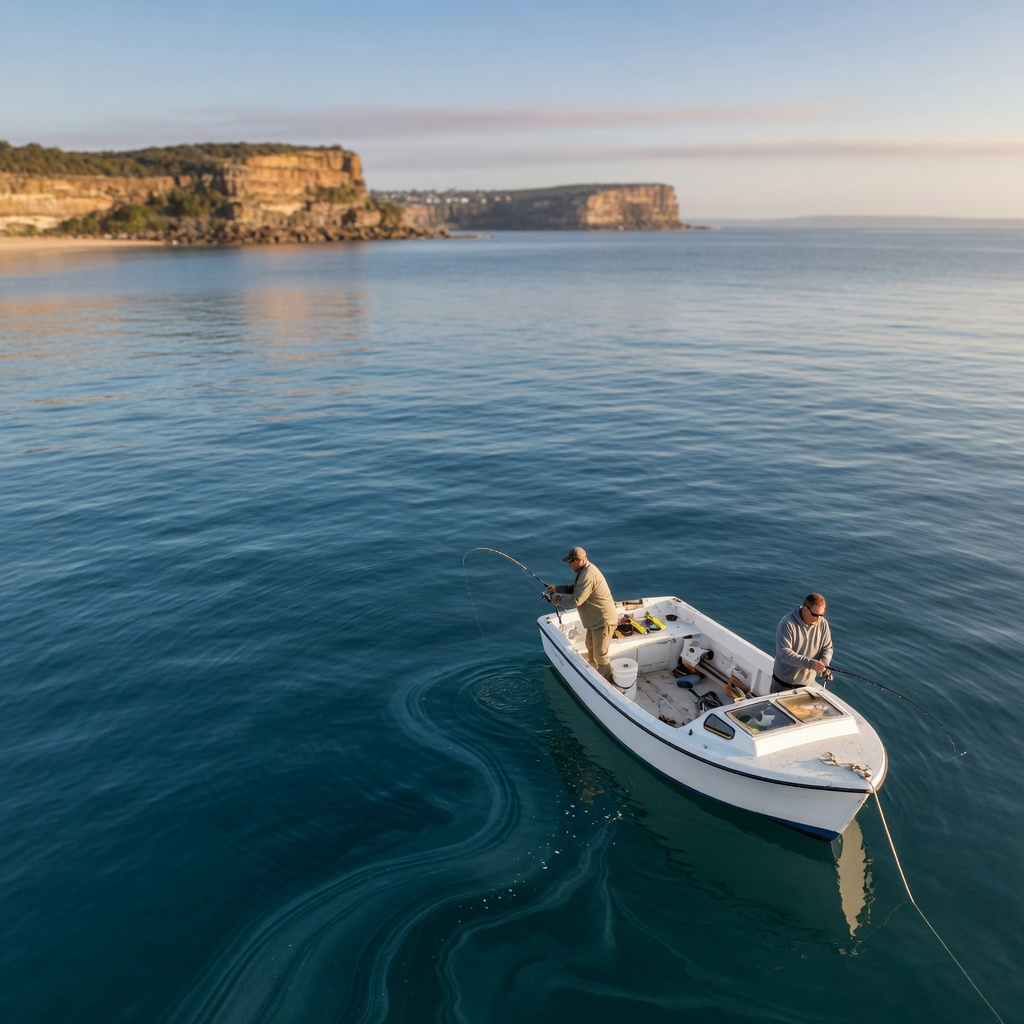
Artificial reefs are purpose-built structures placed on otherwise featureless sand bottom. They do two simple things extremely well: they break the current and they grow food. Within a season or two the steel and concrete is furred with weed, sponge and barnacle, which draws baitfish, which in turn draws the pelagics and the reef species that make an offshore session worthwhile. For anglers running out of Sydney, these structures give you a known mark to work when the wider grounds are blown out or the fish are scattered.
The key idea is edges. Fish rarely sit inside the structure all day — they sit on the up-current face, in the pressure wave, or just behind it in the eddy. Find the edge and you have found the bite.
Reading the Tide and Current
Tide is the single biggest variable on a reef mark. Slack water usually means scattered fish and a slow bite; a moving tide concentrates bait against the structure and switches predators on. As a general rule:
- First two hours of run-out: often the best window for snapper and mowong, as debris and bait wash off the reef.
- Mid-tide flow: strongest current — good for pelagics such as kingfish holding on the front edge.
- Around slack: the time to move, sound around, and mark exactly where fish are sitting for the next run.
Check the tide chart before you leave the ramp and note the direction of flow, not just the height. Around new and full moon the tidal range is larger and current stronger, which can be brilliant on bigger reefs but unfishable on light gear. The smaller neap tides around the quarter moons suit finesse presentations and lighter sinkers.
Moon Phase Notes
Many Sydney anglers favour the days either side of a full moon for kingfish and the darker nights for snapper. Treat moon phase as one input, not a guarantee — a clean, cool current and abundant bait will beat a "perfect" moon on dirty water every time.
Wind and Swell for Offshore Marks
Artificial reefs sit in open water, so comfort and safety come down to the forecast. Light westerlies in the early morning generally give the flattest surface, swinging to a north-easter as the day heats up. Watch for:
- Wind against tide: creates a short, steep chop and makes holding position hard.
- Swell period: a long-period swell of 1.5 m is far more workable than a 1.5 m wind sea with a short period.
- Rising afternoon sea breeze: plan your run home before it builds.
Anchoring, Drifting and Presentation
Two approaches work. Anchoring up-current and berleying back lets you build a trail into the structure — effective for snapper, trag and bream-sized reef fish on lightly weighted baits. Drifting or slow-trolling over the mark suits jigs, soft plastics and micro-jigs, and lets you cover more edges without dropping straight into the snags.
- Sound the mark first and note where bait and arches are showing.
- Set up so your bait or lure swings towards the structure, not into the middle of it.
- Use the lightest sinker that holds bottom in the current.
- Expect losses — use lighter dropper lines so you sacrifice a hook, not the whole rig.
Look After the Structure
Artificial reefs are a shared resource. Take your snagged line and rigs home where possible, observe size and bag limits, and release oversized breeders carefully with a release weight if they show signs of barotrauma. Reefs that are fished thoughtfully keep producing for years.
Plan Your Session with Tide Fishing
Use our tide charts, moon phase and swell pages to line up a window where tide movement and light wind overlap. If you have local observations from a Sydney reef mark or a question about conditions, contact us at [email protected] or +61292658222 during Mon–Fri: 09:00 – 17:00 (AEST) — reader reports help us keep the seasonal notes accurate.
Navigation
See also
FAQ