Essential Boat Safety Equipment for Coastal Fishing
Why Safety Gear Matters More Offshore
Fishing beyond the heads changes the rules. Inside the harbour you are rarely far from a ramp, a beach or another boat, but once you clear the bombora line the swell period lengthens, the wind has more fetch to work with, and a flat inshore morning can turn into a lumpy afternoon run home. The gear you carry is what buys you time while help is on the way. At Tide Fishing we treat the safety checklist as part of trip planning, sitting alongside the tide chart, the moon phase and the swell forecast rather than as an afterthought bundled under the front casting deck.
Requirements for recreational vessels differ by state and by how far offshore you intend to travel, so always confirm the current rules with the maritime authority for your waters before you launch. The notes below are general guidance for Sydney based coastal fishing, not a substitute for those official requirements.
The Core Checklist
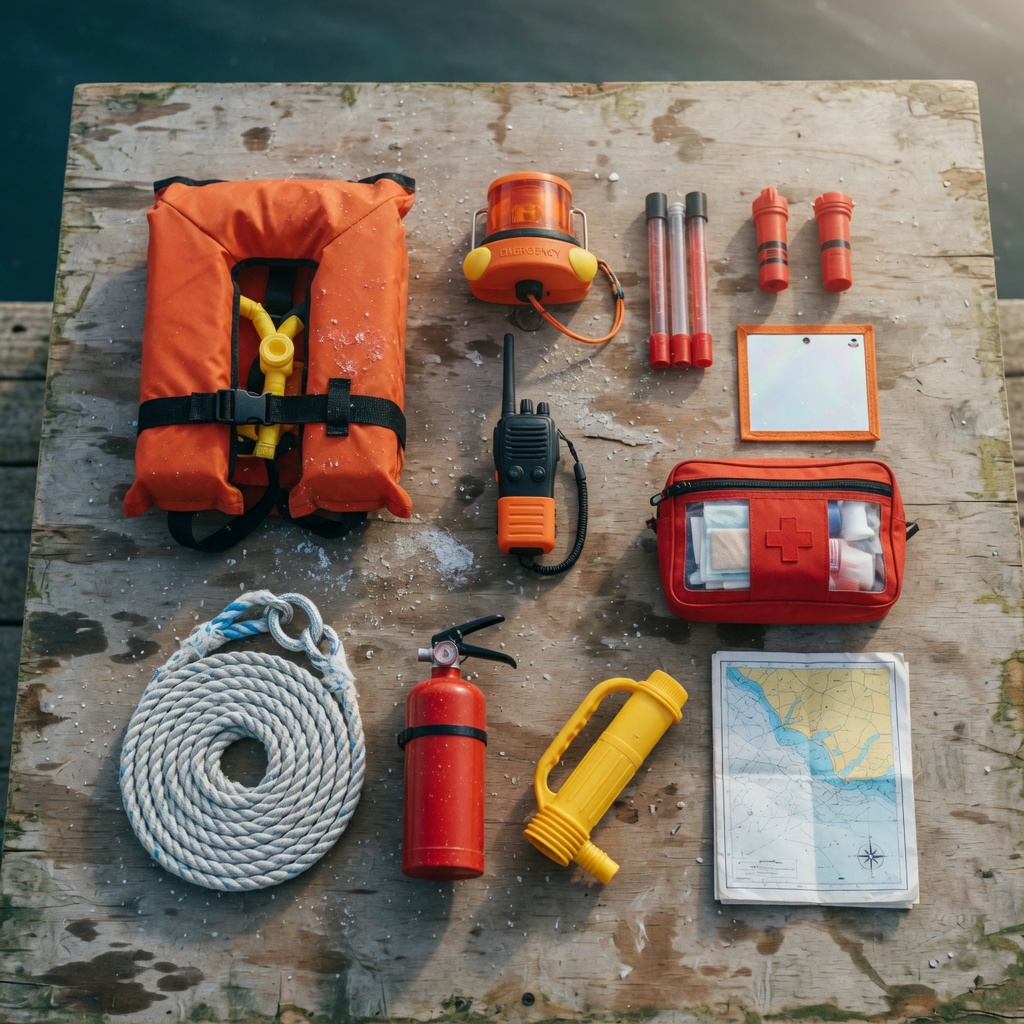
- Lifejackets — one correctly sized jacket for every person aboard, stowed where you can reach it in seconds rather than buried under an esky. Inflatable jackets need their cylinders and firing heads checked on a schedule.
- Two forms of communication — a marine VHF radio plus a mobile phone in a waterproof pouch. Radio reaches other boats nearby; a phone will not.
- EPIRB — registered to you, in date, and mounted somewhere you can grab it if the boat is going over.
- Flares and signalling — in-date flares, a torch, and a mirror or bright cloth for daylight signalling.
- Bailing and pumping — a working bilge pump plus a manual bucket or bailer with a lanyard.
- Fire extinguisher — serviceable, and accessible from the helm without reaching over a fuel source.
- Anchor and adequate rode — enough chain and rope for the depths you fish, which is your best defence against drifting onto rocks after engine failure.
- First aid kit — including sting relief, a pressure bandage and something for hook injuries.
Items Often Forgotten
- Spare kill switch lanyard, taped inside the console lid.
- Basic tool roll, spare spark plugs and a fuel filter for the outboard.
- Drinking water beyond what you plan to drink, plus sunscreen and a spare hat.
- A paper chart or downloaded offline chart in case the plotter fails.
- A written trip plan left with someone ashore, including your expected return time.
Reading Conditions Before You Commit
Equipment does not replace judgement. Around Sydney, the two factors that most often catch boats out are a rising south easterly swell arriving faster than forecast and an outgoing tide meeting an onshore sea at a bar or river mouth. A one metre swell with a long twelve second period pushes far more water than the same height at six seconds, so read the period, not just the height. Cross reference the wind forecast with the tide times: an ebb tide running against fifteen knots of breeze will stack up steep, close chop that makes the run home slow and wet.
Plan your crossing of any bar or narrow entrance for the last of the flood or the top of the tide where possible, and watch a set or two from a safe distance before you go. If the sets are closing out across the whole entrance, the trip is over — pick an estuary session instead and come back when the swell drops. Our tide and swell notes are built for exactly this kind of go or no-go call.
Building a Pre-Launch Routine
Consistency beats memory. Run the same sequence every trip: check the forecast and tide, confirm fuel with a third in reserve, test the radio, count the lifejackets, sight the EPIRB, check the bilge is dry, and tell someone ashore where you are heading. It takes five minutes and removes most of the ways a good day goes wrong.
Once the safety side is squared away you can focus on the fishing itself — matching your drift to the tidal flow, working the bait schools that gather on the change, and timing your best sessions around the moon phase. If you want to talk conditions, the team behind Tide Fishing is contactable on +61292658222 or at [email protected] during Mon–Fri: 09:00 – 17:00 (AEST), and you can compare inshore options on our tide and weather pages before deciding whether the offshore run is worth it.

Navigation
See also
FAQ