Cleaning and Filleting Popular Australian Saltwater Fish
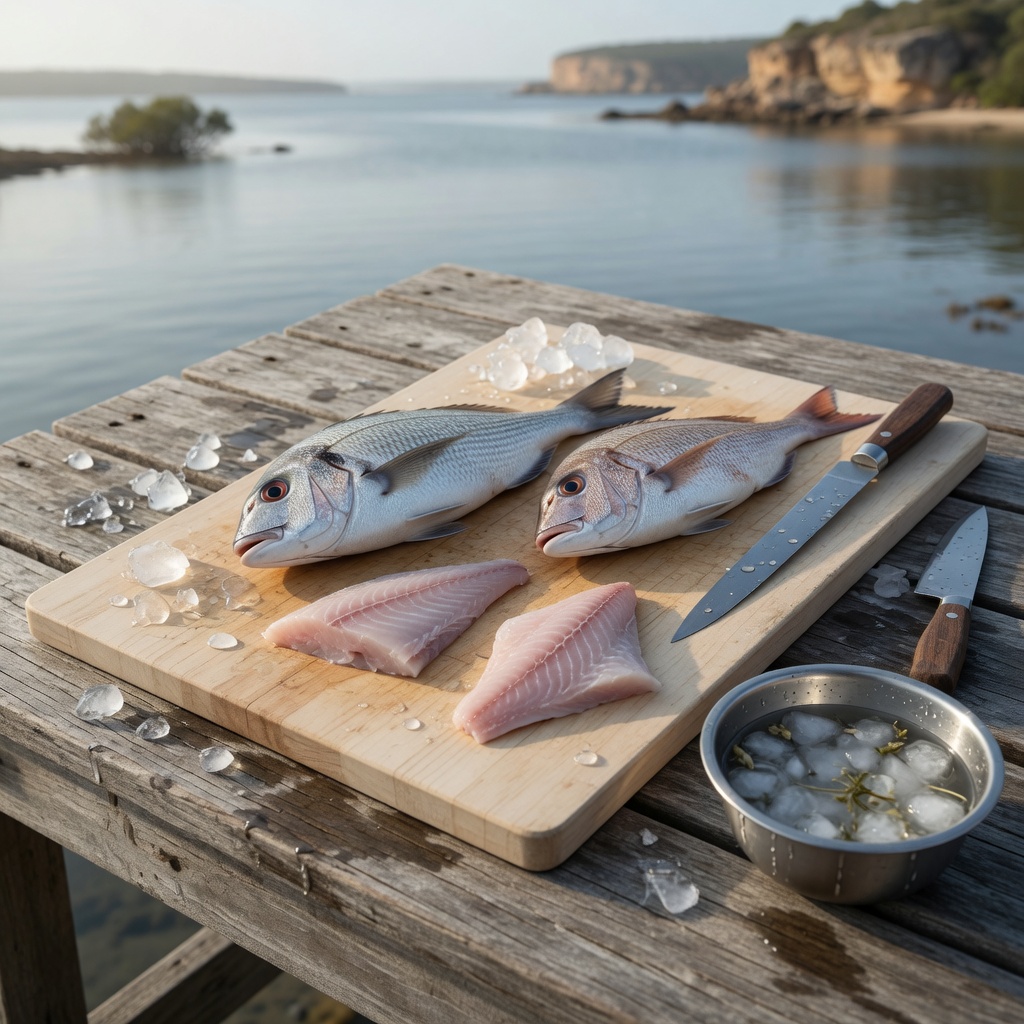
Why Handling Starts Before The Knife
The quality of a fillet is decided long before you reach the cleaning table. On the sandstone headlands and estuary flats around Sydney, air temperatures can climb quickly once the sun is up, and a fish left flapping in a bucket of warm water will lose firmness within the hour. Bleed and chill your keepers straight away: a slurry of ice and seawater in an esky drops the core temperature fast and keeps the flesh translucent rather than milky. Fish taken on a rising tide in cool, clean water almost always eat better than those pulled from a stagnant back-corner of a bay on a hot afternoon, so the same tide and weather thinking that guides your session should guide your handling.
Carry a short filleting knife, a stiffer bait knife for scaling and heads, a small board and a bottle of fresh water. A folding board that fits in the tackle bag is enough for a rock ledge; for beach sessions, work on the tailgate rather than on sand, which finds its way into everything.
Scaling, Gutting And Skinning Basics
Decide first whether the species will be cooked whole or filleted. Whole fish need scaling and gutting; fillets often do not need scaling at all if you intend to skin them.
- Scaling: work from tail towards head with the blade at a shallow angle, or use the back of a spoon for delicate skins. Do it in a bucket of water to stop scales flying.
- Gutting: open from the vent to the gill plate, remove the gut cavity, then scrape out the dark bloodline along the backbone with a thumbnail or teaspoon.
- Gills: remove them if keeping the head for stock — they hold blood and spoil flavour quickly.
- Rinsing: a brief rinse in clean seawater or fresh water is fine, but do not soak fillets; waterlogged flesh cooks poorly.
Species-By-Species Notes
Yellowfin Bream
A staple of estuary and rock fishing around Sydney. Bream have firm scales and sharp dorsal spines, so trim the spiny fin with scissors before you start. Cut behind the head down to the backbone, run the blade along the ribs, then lift the fillet clear. Bream carry a fine rib set — either fillet over the ribs and trim them out afterwards, or take the slower route and follow the bone line closely to save flesh.
Sand And Dusky Flathead
Flathead are the easiest large fillet to take, but the head and gill covers carry venomous spikes: grip behind the head with a cloth or use pliers. Cut down behind the head, follow the backbone to the tail, then flip and repeat. The tail section is boneless and forgiving. Skin from the tail end with the fillet skin-down on the board.
Sand And Trumpeter Whiting
Small, sweet and quick to spoil. Many anglers butterfly whiting rather than fillet them: cut along both sides of the backbone from the top, leaving the belly skin intact so the fish opens flat for the pan. Scale first, because whiting are usually cooked skin-on.
Tailor And Australian Salmon
Both are strong-flavoured beach species with a heavy bloodline. Bleed them the moment they hit the sand, ice them hard, and cut out the dark lateral strip when filleting. Skinning is recommended. These fish reward same-day cooking or immediate smoking rather than a week in the freezer.
Snapper
Larger snapper fillet cleanly and yield thick, even portions. Take the fillet over the ribs, then remove the rib cage as a single triangle. Keep the frames and wings — the collar behind the gill plate is among the best eating on the fish.
Storing What You Keep
- Pat fillets dry with paper towel before packing.
- Store flat in a sealed container over ice, not sitting in melt water.
- Portion before freezing and press out air; thick fillets freeze better than thin ones.
- Label with the date and species — flathead and whiting are best eaten within days, while snapper holds a little longer.
Cleaning Up Responsibly
Frames, guts and scales attract gulls and rats around popular ramps and headlands. Use the cleaning tables and disposal bins where they exist, bag your waste where they do not, and never leave offal on a rock platform where the next swell will simply wash it into the wash zone you were fishing. Take only what you will eat, check current size and bag limits with the relevant NSW fisheries authority before your trip, and rinse boards and knives thoroughly so nothing sours in the tackle bag.
Plan The Session, Then The Kitchen
Good eating fish come from good conditions. Use the tide charts, moon phase, swell and wind information on Tide Fishing to pick a window when water is moving and clean, then handle your catch as carefully as you fished for it. If you have a question about local conditions or a species we have not covered, contact us on +61292658222 or at [email protected] during Mon–Fri: 09:00 – 17:00 (AEST).

Navigation
See also
FAQ