Circle Hooks vs. J Hooks for Australian Species
Why Hook Choice Matters More Than Most Anglers Think
Ask ten anglers on a Sydney wharf which hook they trust and you will get ten answers. The honest reply is that hook pattern should follow the fish, the bait and the way you fish, not habit. A circle hook and a J hook behave completely differently in the moment a fish takes your bait, and that single difference decides whether you land the fish, drop it, or gut-hook something you intended to release.
On Tide Fishing we look at conditions first — tide, swell, wind and moon phase — because those factors set your presentation. Once you know whether you are soaking a bait on an anchored boat over a reef, drifting a whole squid on a slack tide, or flicking softs along an estuary edge, the hook choice largely selects itself.
How Each Hook Actually Works
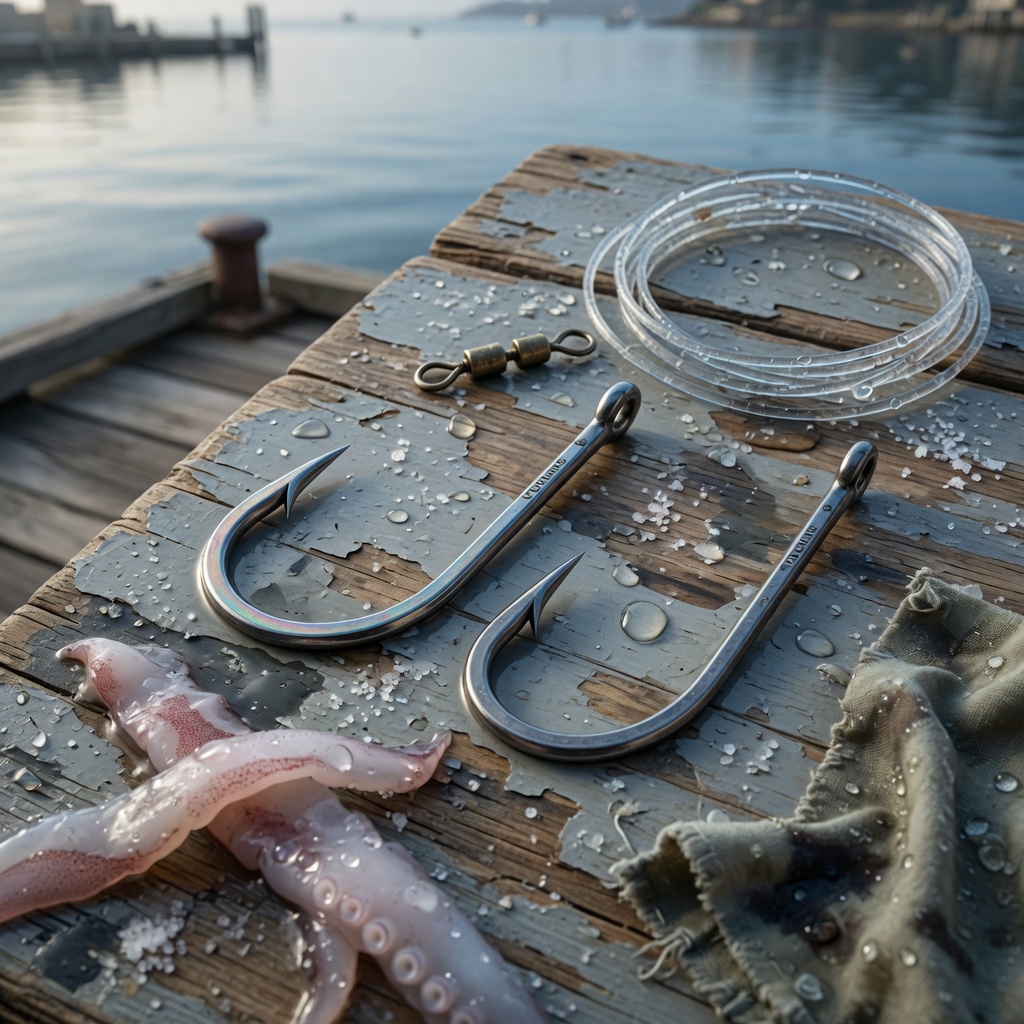
Circle hooks have a point that curves back toward the shank. As a fish moves off with the bait, the hook slides to the corner of the jaw and rotates into the hinge. You do not strike. You let the rod load, then lift and wind. Because the point is shielded while inside the mouth, circles very rarely find the throat or stomach.
J hooks (including suicide, octopus and long-shank patterns) have the point roughly parallel to the shank, so they need an angler to set them. Done properly, that gives fast, deep penetration and excellent hold on hard-mouthed fish. Done late, the bait — and the hook — is already down the fish's throat.
A useful rule of thumb: if you are holding the rod and paying attention, J hooks reward you. If the rod is in a holder, the bite is subtle, or you are fishing with kids and mates who all strike differently, circles will save you fish and save fish lives.
Species-by-Species Guidance
Snapper (Reds)
Snapper inhale baits and turn. Circle hooks in the 4/0–7/0 range on a running sinker or paternoster rig are hard to beat for pinkies through to bigger reds off the Sydney offshore grounds. Match hook size to bait size, not fish size — a whole pilchard needs a longer gape than a strip of squid.
Yellowtail Kingfish
Live baits and kingfish are a classic circle-hook pairing. A circle pinned through the nose or shoulder of a slimy mackerel or yellowtail lets the bait swim naturally and hooks the kingfish in the jaw, which matters when you need to lean on the fish to keep it out of the reef or moorings.
Mulloway (Jewfish)
Mulloway often chew and reposition a bait. Circles reduce deep hooking on undersized fish, which is significant given how many small jew are caught and released around Sydney Harbour and the beach gutters. Use a strong, heavy-gauge pattern — thin wire opens under sustained pressure.
Bream, Whiting and Flathead
Estuary work is where opinions divide. Long-shank J hooks remain excellent for whiting on worms and nippers because the shank helps with unhooking. For bream on baits fished with a semi-slack line, small circles cut down on swallowed hooks dramatically. Flathead take aggressively and are usually lip-hooked either way — but a long shank keeps their raspy teeth off light leader.
Tuna, Mackerel and Fast Pelagics
For trolled or cast lures, hook pattern is dictated by the lure, not preference. On live and cubed baits, circles work well; on high-speed strikes with slack line, a well-set J hook can still be the better tool.
Rigging Details That Make Circles Work
- Leave the point clear. Pin the bait once, lightly. Burying a circle in a heavy bait or bunching flesh over the gape stops it rotating.
- Do not strike. Wind until the line comes tight, then lift smoothly. Striking pulls the hook straight out of the jaw hinge.
- Use a soft-tipped rod or a light drag on the initial run so the fish can move away and set itself.
- Avoid offset circles if release survival matters — the inline versions behave more predictably.
- Check your knot seating. A snell or a snug uni that sits on the shank helps the hook turn correctly.
Matching Hooks to Tide and Conditions
Hooks and tides are connected. On a running tide with the rod in a holder and bait swinging in the current, circles dominate because bites happen while you are not watching. During the slack window either side of the turn, when takes are slower and more tentative, a held rod and a J hook can convert soft bites that a circle might never load up on.
In big swell off the rocks, long drops and heavy sinkers mean you often feel the bite late — another argument for circles. On calm, clear mornings around a new moon in the estuaries, fine wire J hooks with small baits and light leader are usually the more delicate, more effective option. Check the Sydney tide charts, wind and swell forecasts on Tide Fishing before you decide what rig to tie the night before.
Release, Regulations and Common Sense
Whatever pattern you choose, carry long-nose pliers or a dehooker, wet your hands before handling fish, and cut the leader on deeply hooked fish rather than digging. Know the current size and bag limits for NSW species before you keep anything — rules change, so check the official fisheries information each season.
Barbless or crushed-barb hooks are worth trialling if you release most of your catch. You will drop a few more fish; the ones you let go will swim away in far better shape.
The Short Answer
- Rod in a holder, soaking baits, mixed crew, plenty of releases — circle hooks.
- Rod in hand, subtle bites, small baits, tricky estuary fish — J hooks.
- Whole live baits for kingfish and mulloway — heavy-gauge inline circles.
- Lures — whatever the lure came with, kept sharp.
Questions about rigging for a particular Sydney spot or tide window? Get in touch on +61292658222 or [email protected] during Mon–Fri: 09:00 – 17:00 (AEST), and browse the rest of our Sydney tide, swell and moon phase guides to plan your next session.

Navigation
See also
FAQ