Casting Techniques for Distance in Strong Winds
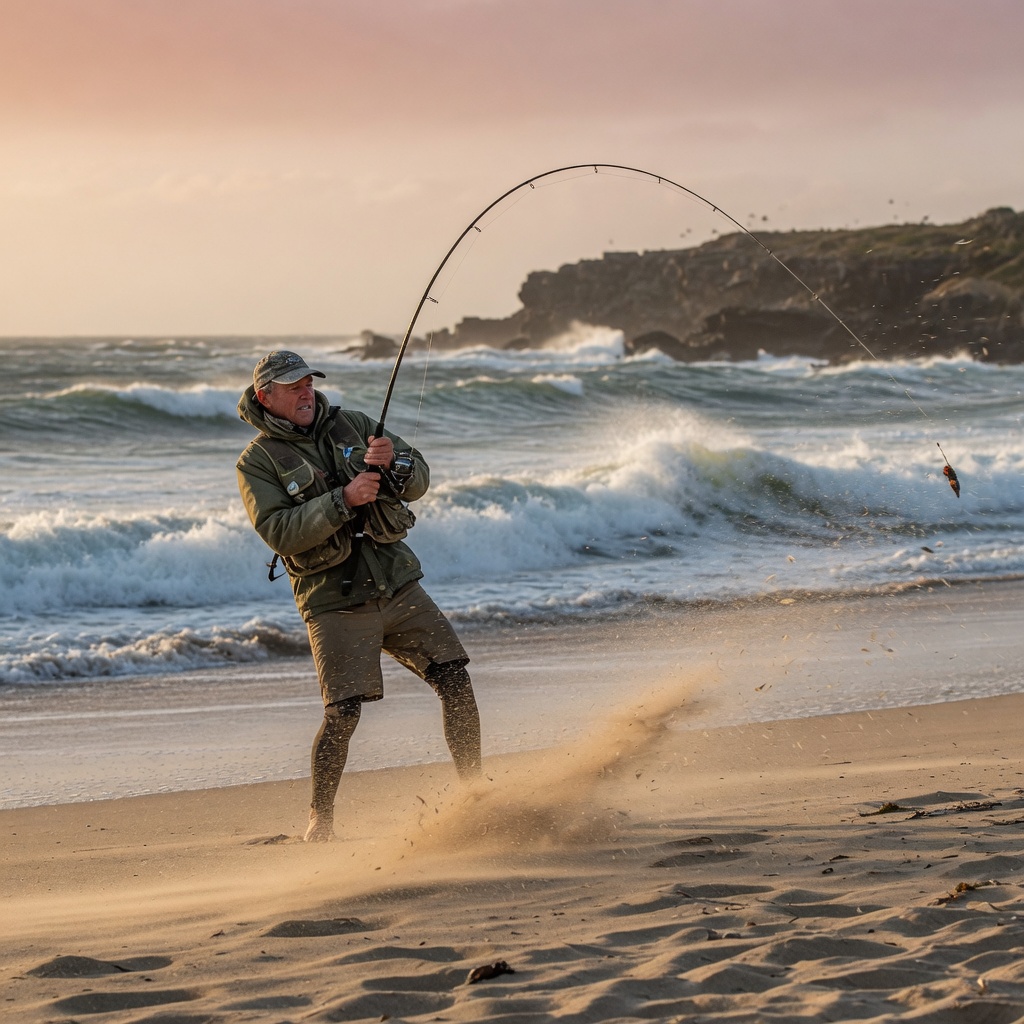
Why Wind Beats Most Casters Before They Start
On a calm morning at a beach like Cronulla or Curl Curl, an average caster can reach the second gutter without much thought. Add a 25-knot nor'easter across the face of the beach and that same cast folds in the air, the line bellies downwind, and the sinker lands short and off to one side. Wind does not just slow the sinker down — it lifts the line into a bow, which drags the whole cast back and destroys your bite detection once the rig is on the bottom. Learning to cast in wind is less about raw power and more about trajectory, timing and reducing the surface area the breeze can grab.
Sydney's prevailing summer sea breeze usually builds from late morning and blows onshore, while winter westerlies come off the land and can actually help you gain distance. Checking wind direction and strength alongside the tide charts on Tide Fishing before you leave the house lets you pick a beach or ledge where the wind works with you instead of against you.
Read the Wind Before You Rig Up
- Headwind (onshore): Cast low and flat, use heavier and more compact leads, and expect to lose 20–40% of your usual range.
- Tailwind (offshore, westerly): A gift. Raise your release angle slightly and go lighter on the sinker for extra carry.
- Cross-wind: The most awkward. Aim slightly upwind of your target and keep the rod tip low after the cast so the line does not balloon.
- Gusty conditions: Time your cast in the lull between gusts — watch the whitecaps and the foam blowing off the wave tops.
Technique One: The Low Flat Trajectory
Into a headwind, most anglers instinctively cast higher and harder, which is exactly wrong. A high cast puts the sinker and line up into faster air. Instead, aim your release around 25–30 degrees rather than the usual 45. Drive the rod through with a smooth, accelerating pull rather than a violent snatch, and finish with the rod tip pointing low at the water. The sinker should skim out under the worst of the breeze and hit the water hard and flat.
Loading the Rod Properly
Distance comes from the rod bending deeply and unloading in one clean sweep. Use a long drop — around 1.5 to 2 metres between rod tip and sinker for a pendulum or off-the-ground cast — and let the weight swing to load the blank before you apply power. Your body does the work: hips and shoulders rotate, arms simply guide. Practise on a park oval with a bare sinker before you take a new technique to a rock ledge.
Technique Two: Cut Down What the Wind Can Grab
- Switch to a thinner main line — a 0.30mm mono or a fine braid with a tapered shockleader offers far less wind resistance.
- Use streamlined sinkers: bomb, spike or bulldozer shapes cut air better than star or pyramid leads of the same weight.
- Clip your baits down with an impact-style rig so the bait sits tight against the sinker in flight instead of flapping.
- Trim long bait tails and bulky pilchard rigs — a neat, secured bait travels much further.
- Keep hook lengths short, around 30–50cm, when the wind is up.
Rock Fishing and Estuary Adjustments
On Sydney's rock platforms, wind and swell arrive together, so casting distance matters less than safe positioning. Never move down to a lower ledge to gain a few metres of range in a rising swell — check the swell forecast and tide stage first, wear a life jacket and cleats, and fish with a mate. Where the wind is howling onshore, a shorter, heavier cast placed in the wash close to the ledge often out-fishes a long cast that the wind drags out of position.
In estuaries such as the Georges River or Pittwater, use the banks and headlands as windbreaks. Position yourself so the breeze is at your back and drift lures or baits with the current. A low sidearm cast under overhanging mangroves is more useful here than raw distance.
Managing Line Once the Cast Lands
Distance is wasted if the wind bows your line. As soon as the sinker touches down, let it settle, then wind down firmly to straighten the line and dig the sinker in. Fish with the rod low in a sand spike, or hold it with the tip near the water so less line is exposed to the breeze. If your line keeps lifting, add weight rather than fighting it — a heavier grapnel-style lead holds bottom and keeps the belly out of your line.
Practise Sessions and Safety
Spend twenty minutes a week casting a bare sinker on grass, focusing on smoothness rather than effort. Count paces to measure progress so you know exactly what range you can hold in a fresh breeze. Always check the field is clear behind you, inspect your shockleader knot for wear, and replace it after heavy sessions.
Want to know which beaches and ledges around Sydney suit the forecast wind this weekend? Browse the tide, swell and moon phase pages on Tide Fishing, or get in touch on +61292658222 or [email protected] during Mon–Fri: 09:00 – 17:00 (AEST) and we will point you toward the conditions guides that match your plans.

Navigation
See also
FAQ