Boat Positioning for Fishing Around Reefs
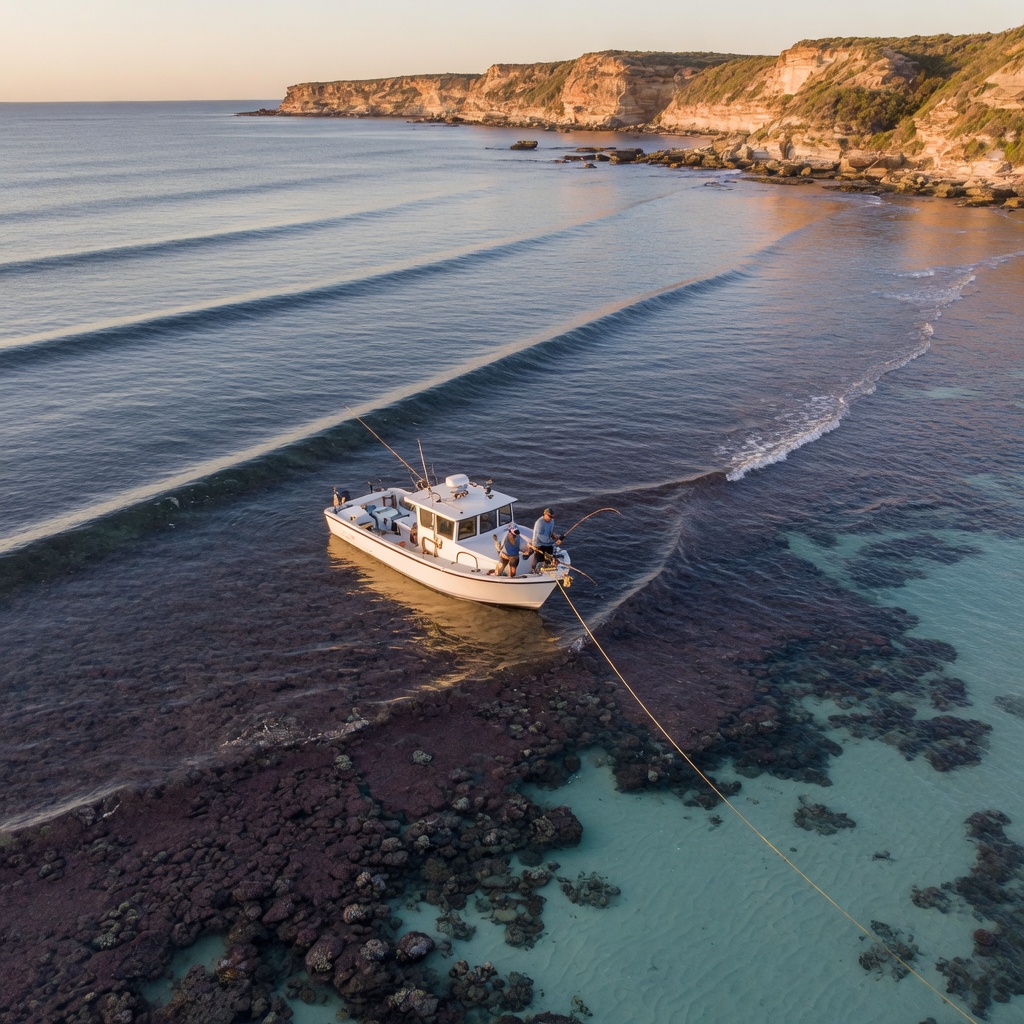
Why Position Matters More Than Tackle
Offshore reefs off Sydney are small targets in a big ocean. A patch of broken bottom the size of a tennis court can hold snapper, morwong, kingfish and pigfish, while the sand fifty metres away holds almost nothing. Getting your baits into that narrow strike zone — and keeping them there while current, wind and swell push the hull around — is the single biggest variable in offshore fishing. Anglers who read water movement well out-fish anglers with better gear almost every trip.
Before you leave the ramp, check the tide chart, the swell period and the forecast wind direction on Tide Fishing. Those three numbers tell you where the boat will sit relative to your marks, and whether you should be anchoring, drifting or holding position on the motor.
Reading the Reef Before You Fish It
Do at least one slow pass over the mark with the sounder before dropping anything. You are looking for three things:
- Edges — where reef meets sand or gravel. Most feeding fish sit on this transition, not in the thickest structure.
- Pinnacles and ledges — sudden rises that push current upwards and concentrate bait.
- Bait sign — clouds of small marks above the bottom mean the reef is switched on. No bait usually means a slow session.
Mark the up-current end of the structure, not the centre. That is where you want the boat to end up once everything settles.
Work Out the Set of the Boat
Drop a bait or a light lure and watch which way the line lays. Then note which way the bow swings. Wind and current rarely agree, and the boat will settle on a compromise angle. Once you know that angle, you can plan an approach that puts your marks behind and below you.
Anchoring Over Reef
Anchoring gives you a static berley trail, which is why it works so well for snapper and bream-family species. The rule is simple: drop up-current or up-wind of the structure and let the boat fall back onto it.
- Idle past the mark and continue 40–80 metres beyond it, depending on depth and how much rope you intend to use.
- Deploy the anchor with enough scope — roughly three to five times the water depth in calm conditions, more in swell.
- Let the boat settle, then check the sounder. If you are short of the reef, let out more rope; if you are on top of it, take some back.
- Start a slow, steady berley trail so it drifts back over the structure rather than sinking straight under the hull.
Use a reef anchor with soft, straightenable tines and an anchor retrieval float so you can recover it by motoring forward. Never tie the anchor rope to a stern cleat in swell.
Drifting the Reef Edges
On days with light current or when fish are scattered, drifting covers far more ground. Start the drift up-current of the reef with baits already near the bottom, then feed line as the depth changes. A drift chute or sea anchor slows the pass and keeps the boat side-on, which stops multiple lines tangling.
Repeat productive drifts exactly. Save a track on the plotter for any run that produced a fish, and re-run it rather than guessing.
Tide, Wind and Swell Windows
Around Sydney, the last of a run-in tide and the first hour of the ebb often produce the cleanest water over inshore reefs. Fish feed hardest when there is enough current to move berley but not so much that a sinker drags across the bottom.
- Wind against current creates a short, steep chop and an awkward hull angle — expect harder anchoring and shorter comfort windows.
- Wind with current means faster drifts; add weight or use a drogue.
- Long-period swell (12 seconds or more) surges over shallow reef even when the height looks small. Stay wide of anything under about eight metres.
- Moon phase influences tidal range; bigger spring tides mean stronger flow and shorter slack periods.
Safety Around Structure
Reef fishing puts you close to shallow water in moving swell. Keep the motor down and ready, watch behind the boat as often as you watch the rod tips, and set a limit for the biggest sea you will accept before you leave the ramp. Log your trip details, carry the correct safety gear for your distance offshore, and give yourself a return margin for a rising afternoon nor'easter.
Plan Your Next Session
Use our tide charts, moon phase and swell pages to pick your window, then match a positioning method to the conditions you expect. Questions about local reef patterns can be sent to [email protected] or +61292658222 during Mon–Fri: 09:00 – 17:00 (AEST), and Tide Fishing keeps its Sydney condition summaries updated for planning ahead.

Navigation
See also
FAQ