Best Conditions for Fishing Coastal Headlands
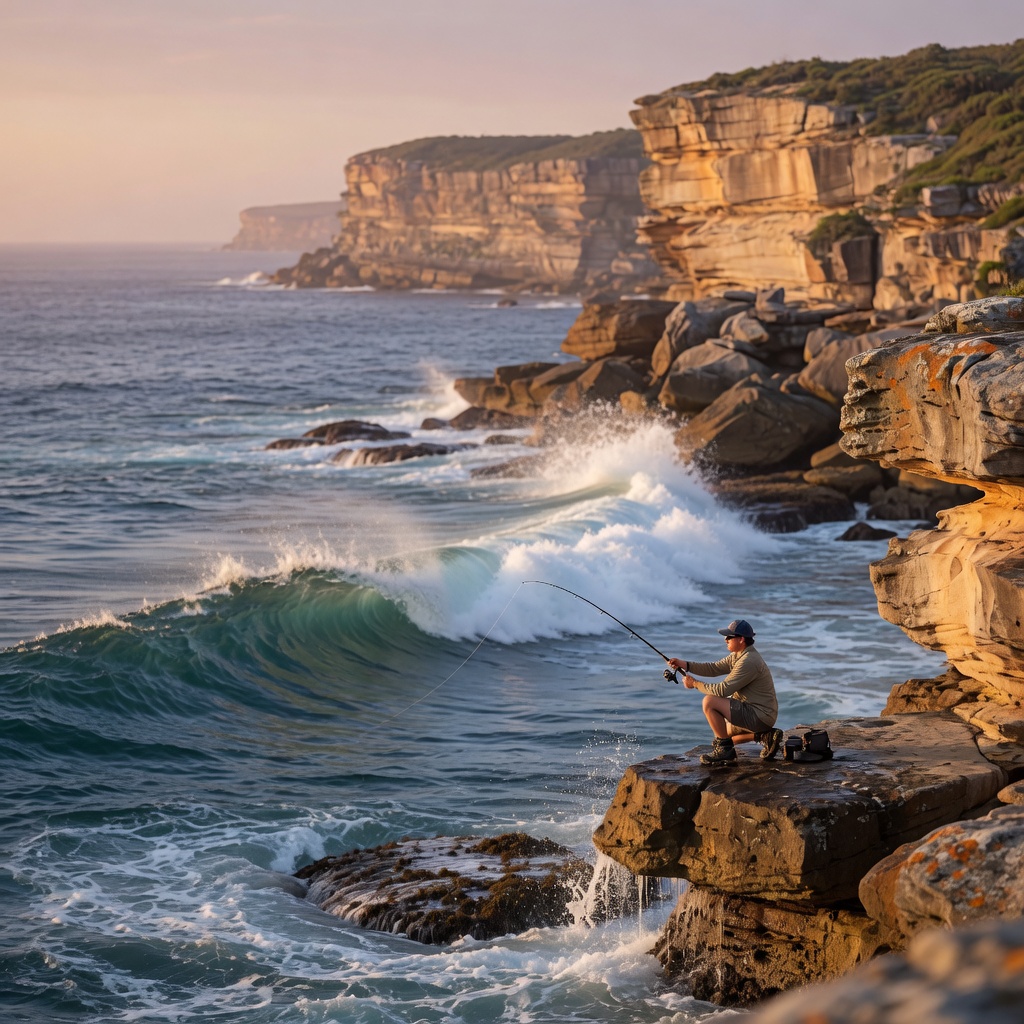
Why Headlands Fish So Well
Coastal headlands are natural funnels. Deep water pushes hard against rock, currents wrap around the point, and baitfish get pinned in the wash. Around Sydney, the sandstone platforms from the northern beaches through to the southern cliffs give shore anglers access to water that would otherwise need a boat. The catch is that headlands only fish well — and only fish safely — inside a fairly narrow window of tide, swell and wind. Reading that window is the whole skill.
Tide: Timing the Moving Water
Most headland species feed hardest when water is moving. On a stationary tide the wash flattens, bait scatters and bites slow. As a general rule of thumb for the Sydney coast:
- Last two hours of the flood — the most reliable period on shallow ledges, as rising water pushes bait onto the rock and lifts the wash to a workable level.
- First two hours of the ebb — strong for drummer, bream and salmon as food washes back off the platform.
- Low tide — best for deep-water ledges and for scouting: you can see the gutters, holes and cunjevoi beds you will fish later on the rise.
- Peak high on a big spring tide — often the worst time on low platforms, because the rock you are standing on may simply disappear under a set.
Always check the tide chart for the closest reference port and adjust for your location, then plan your exit before you plan your cast.
Swell: The Deciding Factor
Swell matters more than tide on rock. A half metre of extra height, or a longer swell period, changes a comfortable ledge into a dangerous one. Watch three numbers together: swell height, swell period and swell direction. A one metre swell at 14 seconds carries far more energy onto the rocks than a one metre swell at 7 seconds. Southerly swell wraps into south-facing points; a north-east swell can leave the same spot glassy. Under roughly one metre with a short period, most low ledges are fishable. Above about two metres, stick to high platforms with clear escape routes, or move to the estuary instead.
Wind and Weather
Light offshore breeze — westerly in Sydney — cleans up the surface, flattens the chop and makes casting and float control far easier. A rising north-easterly in the afternoon builds wind chop and makes bait presentation messy. Strong onshore winds combine with swell to raise the effective water level on the rock, so treat them as a swell increase, not just a comfort issue. Overcast, low-light conditions after a change often bring the best surface action.
Moon Phase and Time of Day
New and full moons produce larger tidal ranges and stronger current flow around points, which usually lifts activity. The trade-off is bigger high tides and more water over the ledges. Quarter moons give gentler, more forgiving conditions. Dawn and dusk remain the strongest bite periods regardless of moon, with the hour either side of first light the single best slot for pelagics working the wash.
A Practical Pre-Trip Checklist
- Check swell height, period and direction for the 12 hours before your session, not just the forecast hour.
- Match the tide chart to your chosen ledge height and note the time of the highest water.
- Confirm wind direction and expected afternoon change.
- Watch the water for at least ten minutes before stepping down — count sets and note the biggest wave.
- Wear rock cleats or spikes, a life jacket, and never fish a headland alone.
- Tell someone your location and return time.
Gear That Suits the Wash
A longer rod helps keep line above white water and lets you reach beyond the first gutter. Heavier leader is normal here because of barnacles and sharp rock. Carry a mix of baits — peeled prawn and cunjevoi for drummer and bream, pilchard or metal lures for salmon and tailor — so you can adapt to whatever the wash delivers. Keep tackle minimal and in a backpack, so both hands are free while moving on wet rock.
Local Notes and Contact
Conditions on the Sydney coast change quickly, so treat every forecast as a starting point rather than a promise. If you want help interpreting a chart before a trip, or want to share what a particular headland did on a given swell, get in touch with Tide Fishing by phone on +61292658222 or email [email protected]. We respond during Mon–Fri: 09:00 – 17:00 (AEST). Fish sensibly, respect bag and size limits, and always let a big swell win.
Navigation
See also
FAQ