Anchoring Techniques for Reef Fishing
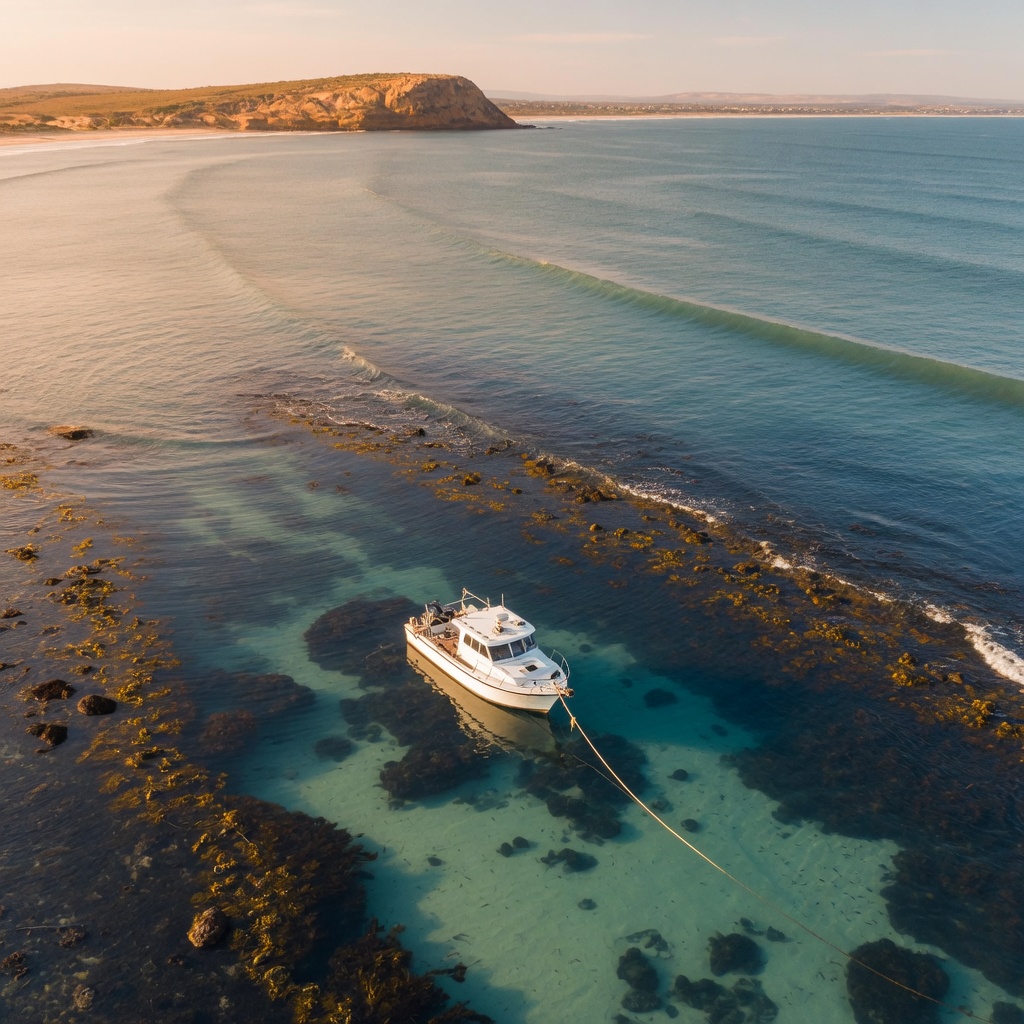
Why Anchoring Well Decides Your Session
Reef fishing off Sydney rewards boats that sit still in exactly the right spot. A snapper edge, a kelp-lined pinnacle or a rubble patch holding morwong may only be a few metres wide, and a boat parked twenty metres off the mark can fish an empty sand flat all morning. Anchoring is therefore less about "dropping the pick" and more about calculating where the boat will end up once the rode comes tight, the tide pushes and the wind swings the bow.
On the reefs from Long Reef to Botany Bay, current and swell often run at odds with the breeze. Before the anchor leaves the bow, work out which force is dominant. Watch a floating weed patch, a bait bag or the trail of berley from a nearby boat — whichever direction that moves is the direction your boat will lie once settled.
Choosing an Anchor for Reef Ground
Reef and rubble are hard on gear, so most local trailer boats carry a purpose-built reef anchor rather than a plough or sand anchor.
- Reef pick (grapnel with soft tines): the standard choice. The tines are bent by hand and are designed to straighten under a hard vertical pull, letting you free the anchor from a crevice.
- Sand anchor: useful when you want to anchor on the sand edge and fish back into the reef, which is often the smarter approach.
- Chain: two to three metres of chain helps the anchor lie flat and take up shock loads from swell.
- Rope: nylon rode with some stretch, long enough for at least five times the water depth plus swell height and freeboard.
Carry a spare pick. Losing an anchor on a reef edge is a normal cost of fishing structure, not a sign of poor seamanship.
Scope, Depth and Tide
Scope is the ratio of rode deployed to water depth. In calm conditions a ratio around 4:1 may hold; in swell or strong current, aim for 6:1 or more. Remember that depth changes across the tide. If you anchor on a low tide in 20 metres and the range is 1.6 metres, your effective scope shortens as the water rises, and the boat can begin to snatch at the rode. Check the local tide chart before leaving and allow extra rope for the flood.
Tide also changes where the boat sits. On a running tide the vessel lines up with the current, but at the turn the boat swings, sometimes through 180 degrees, dragging baits over unfished ground. Many anglers use that swing deliberately: anchor to cover the up-current edge on the last of the flood, then let the change reposition the boat over the down-current side.
The Drift-Back Method
- Mark the reef edge on the sounder and note the direction the boat drifts with engine in neutral.
- Motor up-current or up-wind of the mark by roughly the length of rode you intend to deploy.
- Lower the anchor — do not throw it — and pay out rode steadily as the boat falls back.
- Snub the rope, let it come tight, and watch the sounder. If the mark is not under the transom, adjust by letting out or retrieving a few metres.
- Set a berley trail once settled so the scent works down onto the structure rather than away from it.
Small adjustments matter more than big ones. Shifting five metres of rope can move baits from bare sand onto broken bottom.
Swell, Wind and Safety Judgement
Inshore reefs near Sydney are exposed to south-easterly swell, and a two-metre sea with a short period can make anchoring uncomfortable or unsafe near shallow pinnacles. Watch for swell steepening over the reef top — a sign the water is too shallow to sit in that sea state. A north-easterly seabreeze building through the afternoon can also swing the boat side-on to the swell, which is the point to pick up and move.
- Never anchor from the stern in swell; keep the bow into the weather.
- Keep a sharp knife or cutter at the bow so the rode can be released quickly.
- Use a float and clip system so you can buoy the anchor off and return to it.
- Tell someone your intended marks and expected return time.
Freeing a Snagged Reef Pick
Motor slowly past the anchor position with the rope led to a bow cleat, then take up hard and straight to bend the tines. If that fails, buoy off the rope and drive a wide circle to pull from the opposite direction. Avoid hauling by hand from a rocking bow — hands and backs come off second best.
Putting It Together on the Water
Log every successful anchor set: depth, tide stage, moon phase, wind direction and how far you drifted back. Over a season those notes turn guesswork into a repeatable routine. For more on reading conditions before you launch, browse the tide, swell and moon phase pages on Tide Fishing, or contact us on +61292658222 or [email protected] during Mon–Fri: 09:00 – 17:00 (AEST).

Navigation
See also
FAQ